- 01 What a phone pouch actually protects against
- 02 IP ratings and what the numbers mean
- 03 A note on “IP” claims
- 04 Touchscreen, camera and calls through the pouch
- 05 Fit, closure and the lanyard
- 06 Test it before you trust it
- 07 Pouch or dry bag — or both?
- 08 Keeping the phone alive, not just dry
- 09 The short version
In almost any UK emergency your phone is the single most useful thing you own: it carries the weather warnings, the flood alerts, the torch, the map, the family group chat and the line to 999. Which is exactly why keeping it working and dry matters so much — and why a couple of pounds of waterproof pouch is one of the cheapest bits of resilience you can buy. This guide covers what a phone pouch actually protects against, the IP ratings worth trusting, whether the touchscreen and camera still work through one, and where a pouch fits against a proper dry bag.
A phone pouch is the small end of keeping your kit dry. For everything bigger — documents, a power bank, spare clothes, a first-aid kit — you want a roll-top dry bag (see the dry bag buying guide). The pouch is specifically about the device that has to keep working in your hand, in the rain, at the window filming the flood, or clipped inside a grab bag when you leave in a hurry.
What a phone pouch actually protects against
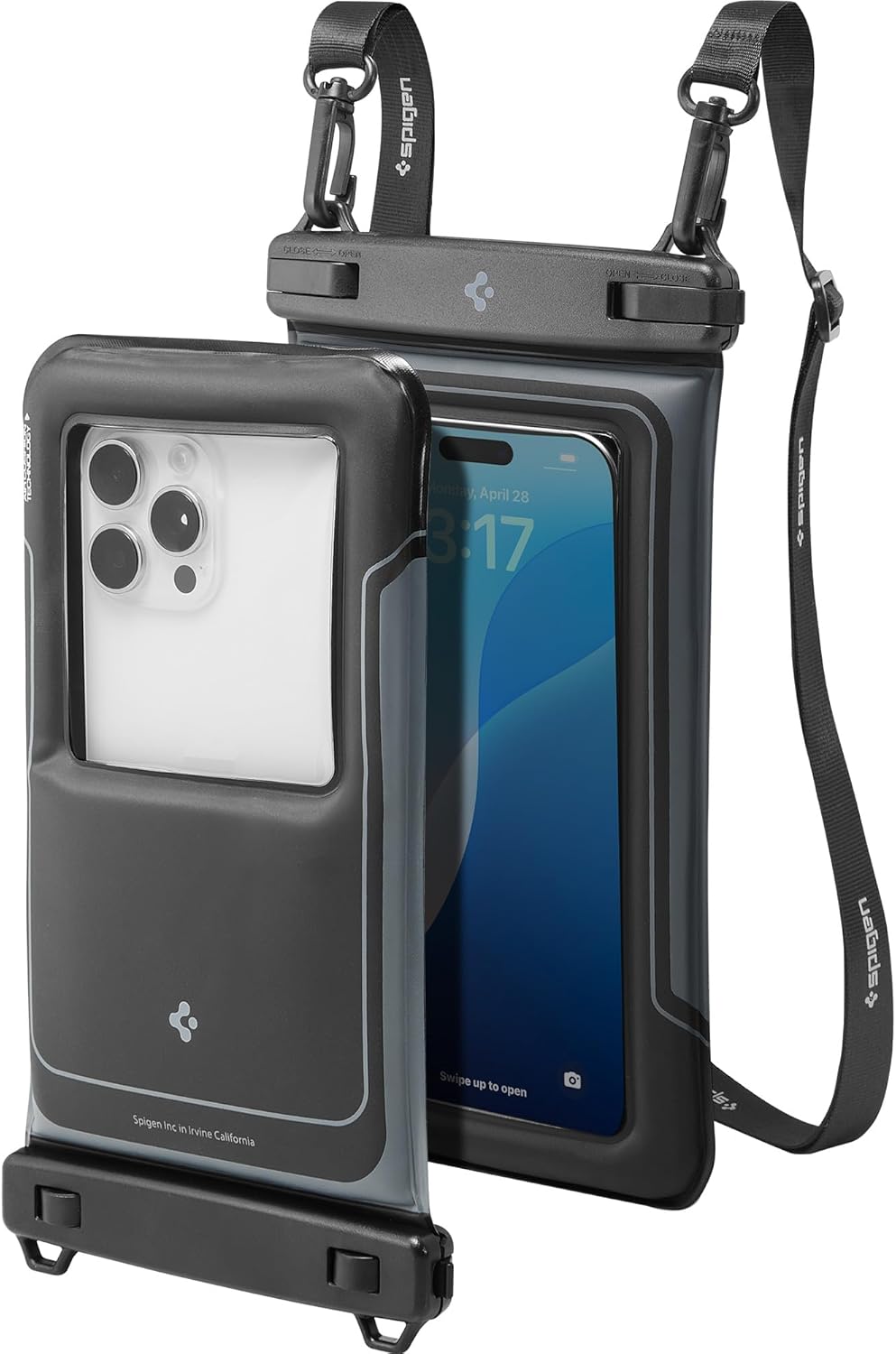
A good pouch is aimed at the everyday water threats: driving rain and storm spray, an accidental drop in a puddle, sink or toilet, splashes while you're bailing or clearing a drain, sweat and grit on a hike, and brief submersion if you fumble it near water. That covers the overwhelming majority of ways UK phones die. What a soft pouch is not designed for is deep, prolonged submersion or diving — the seals and the case flex with pressure, so treat any depth or time claim as a lab figure with a wide safety margin, not a licence to go swimming with it.
It also does a second, quieter job: keeping your phone usable in filthy conditions. Flood water is contaminated, storm debris is abrasive, and a sealed pouch means you can keep your phone in hand — checking alerts, using the torch, calling for help — without ruining it. In cold, wet weather a pouch also stops rain triggering ghost-touches on the screen, which is a real nuisance exactly when you need the phone to work.
IP ratings and what the numbers mean
Look for a stated IP rating, usually IPX8 on phone pouches. The two digits after IP describe protection from solids (dust) and liquids; an "X" means that part wasn't formally tested. So IPX8 means it wasn't rated for dust but was tested for continuous immersion beyond one metre — the top water tier. A pouch marked IPX8 with a specified depth and time (for example, up to 30 metres for 30 minutes in lab conditions) is the type to buy for genuine weather and water protection. Vague listings with no IP rating at all, or only "waterproof" in the title, are the ones to skip — the rating is the closest thing to a testable promise you'll get.
A note on “IP” claims
Cheap pouches sometimes quote impressive depths with no standard behind them. Prefer a recognised brand that names an IP rating and includes a clear closure mechanism, and always test a new pouch empty first (see below). A rating is only as good as the seal you close each time.
Touchscreen, camera and calls through the pouch
The practical question with any pouch is whether the phone still works inside it. On modern pouches the answer is mostly yes: capacitive touchscreens work through a thin TPU window, so you can tap, type and swipe, though it's a little less precise than a bare screen and fingerprint sensors on the screen often won't read. The clear front and back windows let you shoot photos and video, though expect some loss of sharpness and more flare, and the rear window matters if your phone unlocks by face or you want the main camera. Calls and speaker work fine through the material, if slightly muffled. If you rely on Face ID or a fingerprint, check the pouch is designed to allow it, or set a PIN you're happy to type through the window.
Fit, closure and the lanyard
Buy a pouch sized for a modern large phone unless yours is small — most "universal" pouches fit phones up to around 7 inches, which covers almost everything, and a case can usually stay on. The closure is what keeps the water out: the common and reliable design is a snap-and-lock clip system where you fold the top over and press two clips shut, sometimes over a zip-lock seal underneath. Give it a firm, deliberate close every time; a pouch left half-clipped is just a bag. A neck lanyard is worth having — it keeps the phone to hand and floating pouches are easier to grab — but never wear a lanyard around your neck in moving flood water, where anything that can snag is a hazard; hold it or clip it to your bag instead.
Test it before you trust it
Do this once when the pouch arrives and you'll never worry again: seal the empty pouch with a folded piece of dry kitchen roll inside, submerge it in a sink or bowl of water for a few minutes, then open it and check the paper is bone dry. If it's damp, the seal or the pouch is faulty — return it. Only put your actual phone in once the empty test has passed. Re-test occasionally, as the closure clips and window can wear with use.
Pouch or dry bag — or both?
They do different jobs and most kits want both. A phone pouch keeps the one device you'll be holding and using working in the wet; a roll-top dry bag keeps a larger load — clothes, documents, a power bank, snacks — dry inside a rucksack. For a grab bag you'd typically pack a dry bag for the bulk and clip a phone pouch where you can reach it fast. If you want a paper backup that survives a soaking too, a waterproof notebook holds the numbers and addresses your phone can't when the battery dies.
Keeping the phone alive, not just dry
A waterproof phone is no use flat. In a prolonged storm or flood, mobile masts run on backup batteries that don't last forever and mains charging may be off, so pair the pouch with a charged power bank and, for longer off-grid stretches, a solar charger — our off-grid charging guide explains how much you actually need. And because the network itself can fail, a wind-up emergency radio gives you official updates when the phone can't; see emergency communication when the network is down.
The short version
Buy an IPX8-rated pouch from a recognised brand with a clear snap-lock closure, sized for a large modern phone, and test it empty in a sink before you ever put your phone in it. It'll keep your phone working through storm rain, flood clean-up and an accidental dunking for the price of a coffee or two — and your phone is the emergency tool you're most likely to actually reach for. Pair it with a charged power bank so "dry" also means "still on", and use a full dry bag for the bigger kit. See our waterproof phone pouch picks for buyable, availability-checked options.