Most power cuts are an inconvenience, not a danger — but a surprising share of house fires start during them, and the cause is almost always the same: people reach for open flames and improvised heat, then get tired, distracted or go to bed. UK fire services see candle and heater fires climb through the storm season, precisely when the lights are most likely to go out. The good news is that a blackout doesn't have to raise your fire risk at all. Swap the riskiest habits for safer kit, keep your alarms working, and know what to do if something does catch — this guide covers all three, and none of it costs much.
The single biggest win is to stop lighting candles for light. A head torch or LED lantern gives more usable light than a candle, needs no flame, and won't set fire to anything if it's knocked over — see how they stack up in emergency lighting compared. Keep candles as a last-resort backup, not the plan.
Why power cuts start fires
When the power drops, the instinct is to recreate light and warmth with whatever's to hand — and that's where the danger lies. Candles get left burning on windowsills near curtains, knocked over by pets or children, or forgotten when people fall asleep. Camping stoves and disposable barbecues get brought indoors to cook or heat a room, which risks both fire and carbon monoxide. Paraffin, calor-gas and old bar heaters get dragged out and placed too close to furniture or clothes drying nearby. And when the power surges back on, anything left switched on — a hob ring, an iron, a heater — can reignite in an empty room. Every one of these is avoidable.
Light without a flame
For light, go battery-first. A head torch leaves both hands free and points where you look; an LED lantern lights a whole room and stands safely on a table; and a good handheld torch lives in a drawer for grab-and-go. For children — who shouldn't be anywhere near candles in the dark — cheap glow sticks are a genuinely safe, flame-free nightlight that also stops them tripping in an unlit house. Keep spare batteries with each light so a flat torch never tempts you back to matches.
If you do keep emergency candles as a last resort, treat them with respect: use a proper non-tip holder on a hard, clear surface well away from curtains, bedding and anything flammable, never leave one burning in an empty room, and always snuff them before sleeping. Our emergency candles buying guide covers the safer, longer-burning types — but a candle should be your backup's backup, not your lighting plan.
Heat and cooking — the riskiest part
This is where power-cut fires — and carbon monoxide deaths — actually happen. Never bring a camping or gas stove, disposable barbecue or patio heater indoors: burning fuel in an enclosed space produces carbon monoxide you cannot see or smell, and it kills. Cook on portable stoves outside or in a well-ventilated porch only, and let them cool right down before bringing them in. For warmth, layer up, close off one room and use blankets and hot water bottles rather than a naked flame — our guide to staying warm in a winter power cut walks through doing it safely, and safe emergency heating indoors explains what's actually safe to run inside.
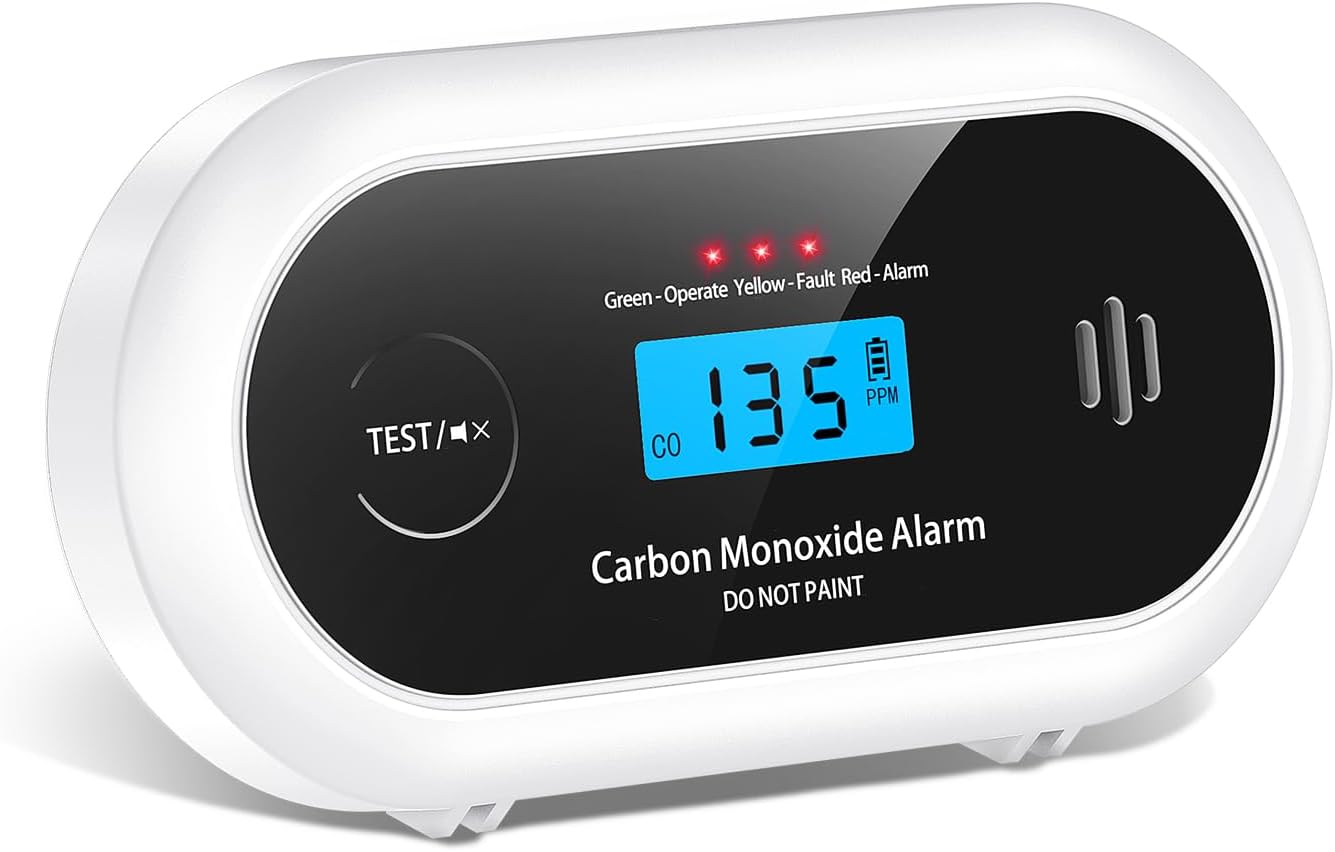
If you use any fuel-burning heater or stove, a battery carbon monoxide alarm is non-negotiable — it's the only warning you'll get. Keep heaters at least a metre from anything that can burn, never dry clothes over or on them, and switch them off before you sleep. See the carbon monoxide alarm buying guide for what to fit.
Keep your alarms working when the power's off
A power cut is exactly when you most need working alarms — and mains-wired ones may be relying on a backup battery you've never checked. Make sure every smoke alarm has a good battery (or a sealed ten-year unit) and test them before storm season; a chirping or silenced alarm is worse than none. Fit at least one carbon monoxide alarm near any fuel-burning appliance or heater. Battery and sealed-battery alarms keep working through an outage when wired-only ones might not — the smoke alarm buying guide explains the difference. Test them monthly and you'll never be caught out.
If something does catch fire
Have the means to stop a small fire before it spreads. A fire blanket mounted in the kitchen smothers a pan or clothing fire in seconds and is the safest first response for a candle or stove flare-up — see the fire blanket buying guide. A home fire extinguisher handles a wider range of small fires, but only tackle one if it's tiny, you have a clear escape route behind you, and it isn't growing — the fire extinguisher buying guide covers the right type for a home.
Never fight a fire that's spreading or between you and the door. Get everyone out, close doors behind you to slow it, stay out, and call 999 from outside or a neighbour's. A fire doubles in size roughly every thirty seconds, so seconds spent hunting for your phone or valuables are seconds you don't have. Agree a simple escape plan with the household now, while the lights are on and everyone's calm.
The short version
Power cuts don't have to be dangerous. Light the house with a head torch, lantern or torch instead of candles, and give children glow sticks rather than a flame. Keep stoves and fuel-burning heaters out of enclosed spaces, back them up with a carbon monoxide alarm, and never leave heat or flame unattended or running overnight. Test your smoke alarms before winter, keep a fire blanket in the kitchen, and have an escape plan. Do that and a blackout is just a quiet evening in the dark — not a call to the fire brigade.