- 01 First, the one thing every CO alarm must have
- 02 Sealed 10-year unit or replaceable batteries?
- 03 Sealed 10-year alarms
- 04 Replaceable-battery alarms
- 05 Features worth paying a little more for
- 06 Where to put it — placement matters as much as the model
- 07 What the different beeps mean
- 08 A sensible plan for most UK homes
Carbon monoxide is the danger people underestimate most in a power cut. It has no smell, no colour and no taste, and the early symptoms — headache, dizziness, nausea — feel like tiredness or a cold, so people go to sleep and don't wake up. The risk climbs exactly when the electricity is off and households reach for gas hobs, camping stoves, paraffin heaters, log burners and portable generators to cook and stay warm. A ten-pound alarm is the single cheapest piece of kit that can stop a fatal mistake. This guide covers how to choose the right one and, just as importantly, where to put it.
First, the one thing every CO alarm must have
Only buy an alarm marked to BS EN 50291 — that's the British and European standard for carbon monoxide detectors in the home. It should also carry a Kitemark or equivalent third-party certification mark rather than just a self-declared CE logo. This matters more than the brand or the price: an uncertified detector bought cheaply online may not trigger reliably at low, chronic CO levels, which are the ones that hurt people slowly overnight. If the listing doesn't clearly state EN 50291, skip it.
Sealed 10-year unit or replaceable batteries?
Sealed 10-year alarms
These have a lithium battery built in for the whole certified life of the sensor (typically seven to ten years), then you replace the entire unit. They're the sensible default for most households: nothing to forget, no dead battery on the night you need it, and the price per year works out low. Note the expiry date printed on the back — the electrochemical sensor itself wears out, so even a sealed alarm is not forever.
Replaceable-battery alarms
These take standard AA or AAA cells you swap yourself. They're cheaper up front and let you keep spare batteries in the drawer, which some people prefer for a grab bag or caravan. The catch is discipline: a replaceable-battery alarm is only as good as your memory to test it and change the cells. If you'll genuinely test it monthly, it's fine; if not, a sealed unit removes the human error.
Features worth paying a little more for
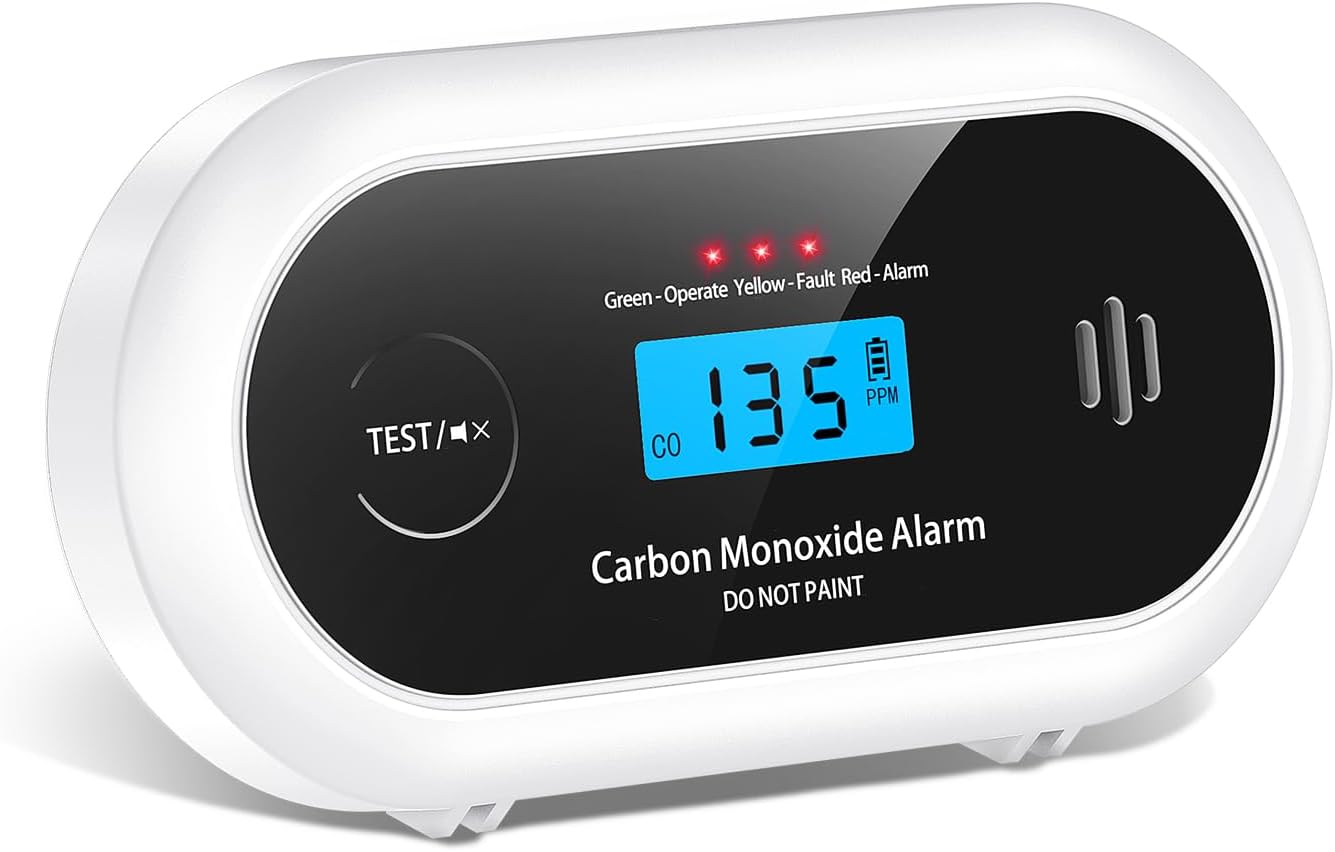
A digital display that shows the CO level in parts per million (ppm) is the most useful upgrade: it lets you see a low, rising background level long before the alarm sounds, which is invaluable if you're running an off-grid stove near the house or troubleshooting a suspect boiler. A peak-level memory (it remembers the highest reading) helps an engineer or your GP understand an exposure. An end-of-life warning that tells you when the sensor is expiring, rather than just going quiet, is also worth having. Combined smoke-and-CO alarms exist and save a fitting, but for a bedroom you often want the CO alarm at a different height from the smoke alarm, so separate units are frequently the better call.
Where to put it — placement matters as much as the model
Carbon monoxide is roughly the same density as air and mixes with it, so — unlike a smoke alarm — a CO alarm does not have to go on the ceiling. Fit one in every room that has a fuel-burning appliance (gas boiler, hob, open fire, log burner) and one in or just outside bedrooms where people sleep. Position it at breathing height when seated or lying down, ideally on a wall about 1 to 3 metres horizontally from the appliance and at least 15cm below the ceiling, or high on a shelf. Keep it away from the immediate cooking splashes and steam of a hob, out of draughts from windows and doors, and away from the direct heat of a fire. Never hide it in a cupboard or behind a curtain.
For a power cut specifically: if you set up a warm room and cook there on a gas or solid-fuel stove — which the manufacturer's instructions will almost always tell you to do outdoors — put a working CO alarm in that room even so, as a last line of defence. The alarm is a backstop, not a licence to run a stove or, worse, a generator indoors. Petrol generators must always run outside, well away from doors and windows; they kill people who run them in a garage or porch.
What the different beeps mean
Learn these before there's an emergency, because people ignore alarms they don't understand. Four or more rapid beeps repeating is the real thing — a carbon monoxide alarm. Act on it: get everyone into fresh air outside, don't stop to investigate, turn off the appliance if you safely can on the way out, and call 999 if anyone feels unwell or the National Gas Emergency line on 0800 111 999 for a suspected gas leak. A single chirp every 30 to 60 seconds usually means a low battery or that the unit has reached end of life — that's a maintenance prompt, not an emergency, but don't silence and forget it. Check your specific model's manual, as beep patterns vary slightly by brand.
A sensible plan for most UK homes
For the average home the best-value setup is one EN 50291 sealed 10-year alarm per fuel-burning room plus one near the bedrooms, with at least one of them being a digital-display model so you can see a rising level early. Add a compact battery alarm to the caravan, boat or the grab bag if you have one. Test every alarm monthly with the button, note the expiry dates in your phone, and treat a CO alarm as non-negotiable kit the moment you own any stove, heater or generator you might use when the power's off. It is the cheapest life-saving purchase in the whole preparedness list.