A good knife is one of the oldest and most useful tools in any kit — for preparing food, cutting cordage, opening packaging, processing kindling and a hundred small jobs a day out or a power cut throws at you. But 'survival knife' covers everything from a modest fixed-blade bushcraft knife to the oversized, hollow-handled fantasy blades that are illegal to carry and useless in the field. In the UK there is a further layer most guides skip entirely: the law about what you can own, and — far more importantly — what you can carry and where. This guide explains, in plain terms, how to choose a survival knife that is genuinely useful, and how to stay firmly on the right side of UK knife law while you do it.
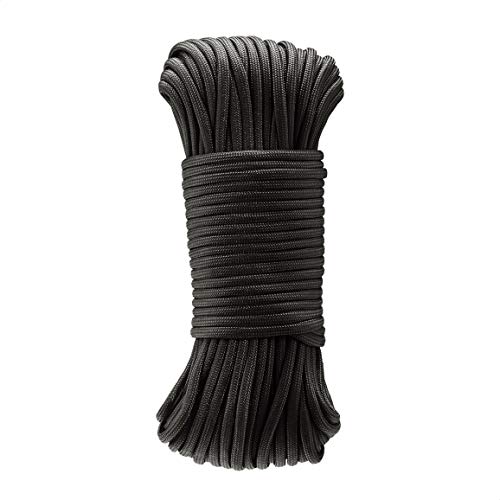
For most people the honest answer is a sensible, sturdy fixed-blade knife kept at home, in the grab bag or with camping kit — not something carried day to day. Pair it with a fire steel for lighting fires, paracord for repairs and lashings, and a folding saw for anything thicker than a wrist, and you have a compact, capable cutting kit. Read on for what actually matters when choosing, starting with the part that trips people up.
UK knife law: what you can own, own vs carry
This is the most important section, so read it before you buy. In the UK it is legal to own most ordinary knives at home. The restrictions are about carrying a knife in a public place. It is illegal to carry any knife in public without good reason — and 'I might need it for survival' or 'it lives in my bag' is not good reason. The one exception you can carry without needing to justify it is a non-locking folding knife with a blade of 3 inches (7.62 cm) or less. Anything with a locking blade, or a fixed blade of any length, needs a genuine good reason every single time you have it on you in public, such as using it for work, or taking it directly to and from a camping trip or bushcraft course.
Some knives are banned outright — you cannot even buy or own them. That includes flick knives and gravity knives, disguised knives, butterfly knives, push daggers, and the 'zombie-style' blades that were fully banned in the UK in 2024. Avoid anything marketed on menace rather than function: serrated saw-back spines, giant clip points, blood grooves sold as combat features. A practical, plain fixed-blade knife like the Morakniv in our picks is legal to own and buy, and the sensible choice — it is a working tool, not a weapon, and it will do everything a preparedness knife needs to. The safe rule is simple: own a proper knife, keep it with your kit, and only carry it when you have a real, current, lawful reason and can explain it plainly.
Fixed blade vs folding
A fixed-blade knife is one solid piece of steel with no moving parts. It is stronger, easier to clean, and better for real work — batoning kindling, food prep, heavier cutting — because there is no hinge to loosen or break, and nothing to trap dirt. This is why the classic 'survival knife' is a fixed blade, and why it is the right choice for a home or camping cutting knife you keep with your grab bag. The trade-off is that a fixed blade is bulkier, always needs a sheath, and — crucially in the UK — always needs a good reason to carry in public.
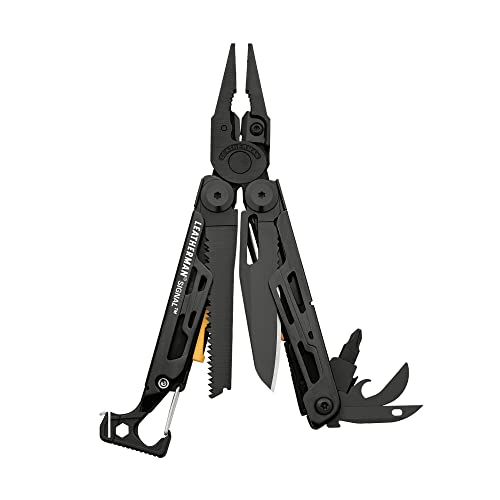
A folding knife is more compact and pocketable, and a non-locking folder with a sub-3-inch blade is the one type you may carry in public without justifying it. But folders are weaker at the hinge, fiddlier to clean, and a locking folder is legally treated like a fixed blade for carrying purposes. For preparedness, a fixed blade at home wins on capability, while a multi-tool — with its pliers, screwdrivers and small blade — is usually the more useful thing to actually carry day to day. Many people are best served by both: a fixed-blade knife in the kit, and a multi-tool on them. See our multi-tool vs survival knife comparison for the head-to-head.
Blade steel: carbon vs stainless
Blade steel comes down to a trade-off between edge, toughness and rust resistance, and for a preparedness knife the two families that matter are carbon steel and stainless steel. Carbon steel (such as the high-carbon blade on many bushcraft knives) takes a very keen edge, is easy to sharpen in the field, and is tough — but it rusts if you leave it wet, so it needs wiping dry and a light oil now and then. Stainless steel resists rust far better, which suits a knife that lives in a damp shed, a car or a grab bag and gets little attention, at the cost of being slightly harder to sharpen to the same fine edge.
For a knife you will maintain, carbon steel gives the best cutting performance and is genuinely easy to bring back to razor sharp. For a stock-and-forget kit knife, stainless is the lower-maintenance choice. Either is fine — this is not worth agonising over. What matters far more is that the steel is full-tang or near it, properly heat-treated, and from a maker with a track record. A modestly priced knife from a reputable brand will outperform an expensive one bought on looks, and the Morakniv-style knife in our picks is the archetype of good steel and geometry at a sensible price.
Tang, grind and handle
Tang is the part of the blade steel that extends into the handle, and it is the single biggest predictor of whether a knife will survive real use. A full tang — where the steel runs the full length and width of the handle — is strongest and is what you want in a knife you might baton or lever with. A partial or 'rat-tail' tang, common on cheap knives and the old hollow-handled 'survival' knives, is a weak point that snaps under load; avoid hollow-handled knives entirely, however tempting the little compass and matches inside. Many excellent bushcraft knives use a strong partial tang moulded into the handle and are perfectly reliable for cutting and carving, so 'full tang' matters most if you plan to baton or pry.
Grind is the shape of the blade's cross-section: a Scandinavian ('Scandi') grind is easy to sharpen and superb for woodwork and carving; a flat or convex grind is a good all-rounder for food prep and general cutting. For a survival knife, a plain (non-serrated) edge is the sensible choice — it is far easier to sharpen in the field and better for controlled cutting; serrations are hard to maintain and rarely needed. The handle should be comfortable, grippy when wet, and big enough for a gloved hand; a bright handle or a lanyard hole (for a loop of paracord) makes a dropped knife easier to find. A well-fitting sheath with a secure retainer matters as much as the blade, because it is what makes the knife safe to store and carry with the rest of your kit.
Knife, multi-tool or saw — which and when
A knife, a multi-tool and a folding saw overlap but each does something the others do badly. A fixed-blade knife is the best pure cutter — food, cordage, feather sticks, batoning small kindling — and the thing you reach for most in camp. A multi-tool trades outright cutting ability for pliers, screwdrivers, scissors and a small blade, which makes it the more useful all-rounder to carry and the better choice for repairs and fiddly jobs. A folding saw does one thing a knife cannot do safely: cut through anything thicker than your wrist, quickly and with far less effort and risk than batoning.
For a complete cutting kit, the sensible plan is a fixed-blade knife for cutting and carving, a folding saw for wood processing, and a multi-tool for repairs and everyday jobs — with a fire steel and paracord rounding out the classic four. If you can only have one thing on you day to day, a multi-tool is usually the most useful and the easiest to carry lawfully; if you are building a home or camping kit, a proper fixed-blade knife earns its place first. See our survival knife vs folding saw comparison for where the knife stops and the saw starts.
What to look for when buying
Buy a plain, practical fixed-blade knife from a reputable maker, not a fantasy blade. Prioritise, in order: a strong tang (full tang if you will baton or pry), quality heat-treated steel (carbon for the keenest, easiest-to-sharpen edge; stainless for low maintenance), a plain non-serrated edge, a comfortable grippy handle, and a secure sheath. A blade of around 8–11 cm suits almost everything a preparedness knife needs; longer blades are heavier, harder to control for fine work, and no more lawful to carry. Skip serrated saw-backs, hollow handles, and anything sold on aggression — those are the features that make a knife worse in the field and, in some cases, illegal to own.
Our survival knife pick is the Morakniv Companion — a Swedish-made fixed-blade that is the reference point for a good, honest working knife: excellent steel and Scandi grind, comfortable grip, a secure sheath, and a price that lets you own one without a second thought. It is legal to own and buy in the UK, and it will handle food prep, cordage, kindling and carving without complaint. Keep it with your grab bag or camping kit, learn to sharpen it, and it will outlast almost everything else in the box.
The short version
A survival knife is a working tool, not a weapon: choose a plain fixed-blade from a reputable maker, with a strong tang, good heat-treated steel and a plain edge, and skip the fantasy blades. The UK law is the part to get right — most knives are legal to own at home, but carrying any knife in public needs a genuine good reason, with the only carry-anywhere exception being a non-locking folder of 3 inches or less; some knives (flick, butterfly, zombie-style) are banned outright. Keep your knife with your kit, carry it only when you have a real lawful reason, and pair it with a folding saw for bigger wood, a multi-tool for repairs, and a fire steel. See our survival knife pick, the multi-tool vs survival knife and survival knife vs folding saw comparisons.