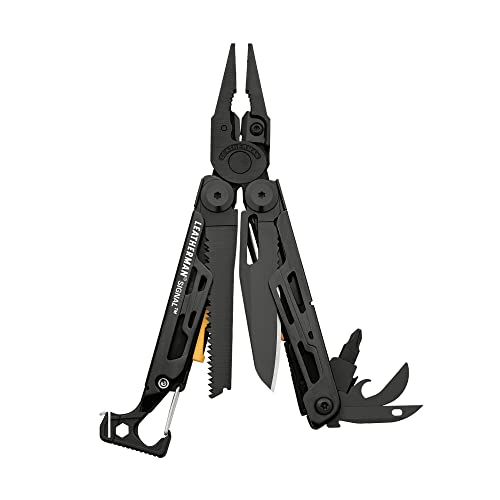
A multi-tool is one of the highest-value things you can put in a kit: a small folding block that stands in for pliers, a knife, screwdrivers, scissors and more, for jobs you can't predict in advance. In an emergency it's the tool you use to cut cordage, tighten a loose fitting, strip a wire, open a tin or make a quick repair when the proper tool is nowhere to hand. But quality varies enormously, most multi-tools carry a blade so UK carry law matters, and the flashiest ones are often the least useful. This guide covers what actually earns its place and where to spend.
Pliers-based or knife-based?
Multi-tools split into two broad families. Pliers-based tools fold around a set of pliers and are the classic 'workhorse' design — the pliers, wire cutters and a solid set of drivers make them genuinely useful for repairs, car and household jobs, and anything fiddly. Knife-based tools (the Swiss Army style) fold around a main blade with smaller implements tucked in the handle; they're lighter, more pocketable and better for everyday cutting, but weaker for heavy gripping and cutting wire. For an emergency or vehicle kit, a pliers-based tool is usually the more capable single choice. For everyday carry and lightness, a knife-based tool wins. Many well-prepared people keep one of each.
Which tools actually earn their place
Ignore the tool count on the box. A tool that does 12 things well beats one that claims 25 and does most of them badly. The implements that genuinely earn their space are pliers with wire cutters, a decent locking blade, flat and cross-head screwdrivers, a can and bottle opener, and scissors. A small saw, an awl and a file are useful bonuses. What you can usually skip are the gimmicks: tiny hex bits you'll never carry the driver for, a 'ruler' etched on the handle, and novelty attachments that add bulk. Pick the tool whose core functions are the ones you'll actually reach for, and don't pay for the rest.
Blade length and the UK carry law
This matters and is widely misunderstood. In the UK you can carry a non-locking folding knife with a blade of 3 inches (7.62 cm) or less without needing a specific reason. A locking blade, or any blade over 3 inches, counts as carrying a bladed article in a public place, which is only lawful if you have a 'good reason' — work, a genuine outdoor activity, transporting it to or from use. Storing a locking multi-tool at home or in a kit at home is fine; carrying one in public routinely is not. Many multi-tools use locking blades, which are safer to use but carry the legal condition. Know which category your tool falls into, and don't carry a locking blade in public 'just in case'. When in doubt, choose a sub-3-inch non-locking blade for anything you'll carry day to day.
Build quality, steel and locking
A multi-tool lives or dies on its build. Stainless steel construction resists the corrosion you'll get from damp UK conditions, a car boot or a grab bag. Tools that lock open are far safer to use hard — an unlocked implement folding on your fingers under load is the classic multi-tool injury — so favour locking implements even setting the blade aside. Check that the pliers close smoothly, the drivers sit flush and the whole thing doesn't feel gritty or loose. A reputable brand with a real warranty is worth the premium here: a good multi-tool is a decades-long tool, and the cheap ones tend to seize, rust or snap at exactly the wrong moment.
Size, weight and how you'll carry it
Match the tool to the job. A full-size pliers-based tool is the right choice for a car kit, a home emergency kit or a workshop drawer, where a bit of weight buys real capability and it lives in a pouch on a belt or in a bag. A compact keychain or Swiss Army style tool is what you'll actually have on you when something unexpected happens away from home — and the tool you have beats the better tool you left at home. Consider a belt sheath or pouch for a heavy tool, and check whether it has a pocket clip if you want it to hand. For most people the answer is a capable full-size tool in the kit plus a small one on the keys.
How a multi-tool fits with a knife and saw
A multi-tool is a brilliant generalist and a poor specialist. Its blade is fine for cutting cordage, opening packaging and light food prep, but it's short and awkward for serious cutting, batoning or repeated hard use — that's a job for a proper fixed or folding knife. Its little saw handles a stray branch or a plastic tie but will exhaust you on real wood, where a dedicated folding saw does in a minute what the multi-tool does in twenty. Think of the multi-tool as the thing that covers the hundred small unpredictable jobs, with a dedicated knife and saw alongside it for the cutting work it isn't built for. See our multi-tool vs survival knife and folding saw comparisons for where each earns its place.
A sensible plan for most UK homes
For most people the best setup is one good pliers-based multi-tool from a reputable brand, in stainless steel with locking implements, kept in the home emergency kit or car kit where a locking blade is legally no problem. Add a small non-locking, sub-3-inch tool for everyday carry if you want something on you day to day within the law. Don't chase the highest tool count; buy the one whose pliers, blade, drivers and scissors are solid, and keep a dedicated knife and folding saw alongside it for the heavier cutting. Buy once, buy well, and it'll be quietly earning its place in your kit for years.