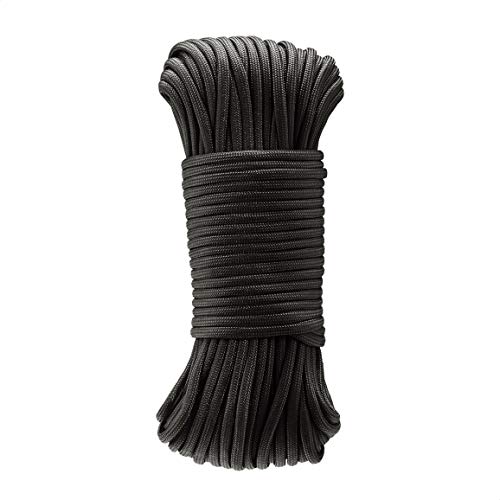
Cordage is one of those quiet, cheap items that turns up in almost every real emergency: lashing a tarp over a stripped roof after a storm, securing a load in the car boot, guy-lining a shelter, hanging kit to dry, rigging a washing line indoors during a power cut, or improvising a splint or sling in first aid. A reel of good paracord costs a few pounds and weighs almost nothing, which is exactly why it earns a permanent place in the grab bag, the car and the shed. The confusion is that "paracord" is sold in half a dozen grades and plenty of cheap imitations, and the numbers on the label — 550, 425, 275 — actually mean something. This guide explains what to buy, what it's really rated to hold, and how to spot the fake stuff.
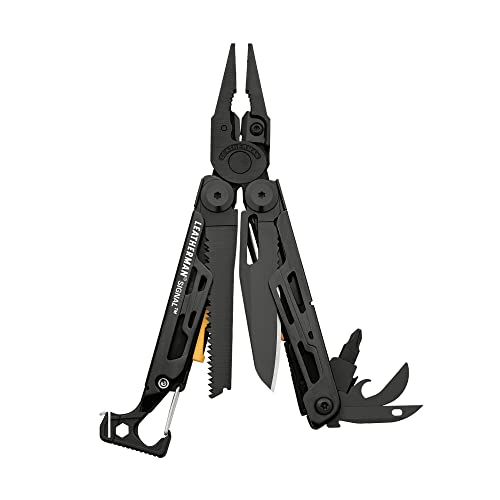
Paracord pairs with the rest of the shelter and repair kit rather than replacing it. Use it alongside a tarpaulin and bungee cords for quick storm cover, duct tape for sealing and patching, and a multi-tool or survival knife for cutting it cleanly. For the wider picture see our tarp buying guide and storm preparedness.
What the numbers mean — 550, 425, 275
The number is the cord's rated minimum breaking strength in pounds. Type III 550 is the one most people mean by "paracord": a nylon kernmantle cord with a woven outer sheath around seven or more inner strands, rated to about 550lb (roughly 250kg) before it breaks. Type II 425 is a slightly thinner version rated to about 425lb, and 275 (sometimes called micro-cord or Type I-ish) is a thin, lightweight cord rated to about 275lb — handy for whipping, zip-pulls, lashing small items and repairs where bulk matters more than raw strength. For general preparedness, genuine Type III 550 is the default: strong enough for shelter rigging and load-securing, thin enough to carry plenty of, and the inner strands can be pulled out for finer jobs like fishing line, sewing or snares.
A crucial safety point: those ratings are static breaking strengths, not safe working loads, and they are not a licence to climb. Paracord is a utility cord, not life-support rope — it stretches, it weakens over knots and edges, and a 550lb rating means it fails somewhere around 550lb, not that you should ever load it near that. For anything where a person's weight could come onto the line, use proper rated climbing or rescue rope, not paracord. As a rule of thumb, keep working loads well under a quarter of the rated strength.
Real Type III vs cheap imitations
Plenty of cord is sold as "paracord" that is nothing of the sort — a hollow braided sheath with a couple of thin filler strands, or a stiff commercial polypropylene cord that looks similar but is far weaker. Genuine Type III 550 has a woven outer sheath over seven (or more) twisted inner yarns; if you cut a piece and pull it apart you should find those separate inner strands, each made of two or three plies. Nylon paracord feels supple, has a little stretch, and the cut ends melt cleanly when sealed with a flame. The tell-tales of the cheap stuff are a hollow or nearly-hollow core, very few or fused inner strands, a stiff plasticky feel, and a suspiciously low price on a large reel. Recognisable outdoor and EDC brands, or Amazon's own Basics line, are a safer bet than an unbranded bulk reel.
For UK buyers, look for cord described as genuine 7-strand Type III 550 (or clearly labelled 275/425 if that's what you want), nylon rather than polypropylene, and ideally from a brand that states the breaking strength honestly. Our cordage and shelter picks list availability-checked options; the EdcX Type III 550 is a solid genuine 7-strand example, with a thinner 275 cord for light jobs and a bulk reel when you want plenty to cut from.
How much to carry, and where
Length beats theoretical strength for most jobs, because you almost always want more cord than you think — a single tarp pitch can eat 15–20 metres once you've run a ridgeline and four guys. A sensible starting kit is a 15–30m hank in the grab bag, a larger reel (50–100m) in the shed or garage for storm repairs, and a short length looped onto the outside of a rucksack or kept in the car. Because paracord is so light and cheap, it's one of the few items where carrying "too much" costs you almost nothing. Keep it tangle-free by winding it into a hank or using a small winder, and cut lengths to the job rather than knotting scraps together, since knots are where cord loses most of its strength.
A few knots cover almost everything you'll do with it: a bowline for a fixed loop that won't slip, a taut-line hitch for adjustable tarp guys, two half-hitches for tying off, and a truckers' hitch for really tensioning a ridgeline or a load. You don't need to be an expert — learning those four before you need them, in daylight and dry, is worth more than any premium cord.
Looking after it — and when to retire it
Nylon paracord is tough but not immortal. UV from long sun exposure, repeated heavy loading, abrasion over sharp edges and grit worked into the fibres all weaken it over time. Seal cut ends with a lighter so they don't fray, keep it out of prolonged sunlight when stored, and rinse and dry it if it gets muddy or salty. Inspect any length that's taken a real load or rubbed over an edge — if the sheath is furred, cut, glazed from heat, or the core shows through, retire that piece to non-critical use and cut fresh. Given how cheap it is, there's never a good reason to trust a suspect length for anything that matters.
The short version
For general UK preparedness, buy genuine 7-strand Type III 550 nylon paracord from a recognisable brand, carry more than you think you need, and keep a thin 275 cord for light jobs. Treat the rating as a breaking strength, not a working load, and never use paracord as climbing or life-support rope. Seal the ends, learn four knots, inspect after hard use, and keep a hank in the grab bag, a reel in the shed and a short length in the car. See our paracord picks and cordage and shelter best-picks for buyable, availability-checked options.