- 01 The three types of camping cookware
- 02 1. The classic mess tin
- 03 2. The nested cookset (pots, pan, lid)
- 04 3. The integrated / heat-exchanger system
- 05 Aluminium, stainless or non-stick: which material?
- 06 What size do I need?
- 07 The details that matter off-grid
- 08 Cleaning cookware without a tap
- 09 Frequently asked questions
- 10 Is a mess tin or a cookset better for emergencies?
- 11 Can I use my normal kitchen pans on a camping stove?
- 12 Aluminium or stainless steel — which should I buy?
- 13 Do heat-exchanger pots really save fuel?
- 14 What should go in a basic cook kit?
- 15 The short version
Once you've sorted a stove and its fuel, you still need something to cook in. This is the part most people leave to a random saucepan from the kitchen — and then discover it doesn't sit on a backpacking burner, has no lid, and takes forever to boil in the wind. Camping cookware runs from a single flat mess tin to a full nested cookset with a burner built in, and the right choice depends on how many people you're feeding, what you're cooking, and whether it lives in a rucksack or a home power-cut box. This guide explains the types, the materials, how to size a set, and how to keep it usable off-grid.
The three types of camping cookware
Cookware for off-grid use falls into three broad groups. Each suits a different job, and there's no single "best" — it depends on the trip.
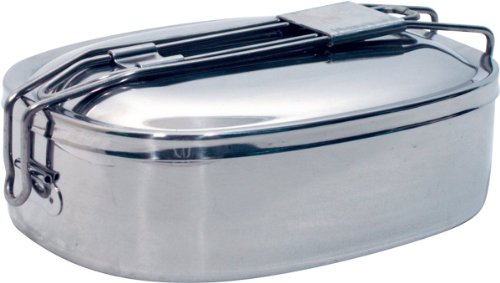
1. The classic mess tin
A mess tin is a flat, rectangular aluminium pan with a folding handle — the traditional British Army design (the larger tin nests inside the smaller). It's cheap, near-indestructible, packs flat, and doubles as a plate and a bowl. It's ideal for one person heating a boil-in-the-bag ration, beans, or a brew over a small burner or a solid-fuel or spirit stove. What it isn't is precise: bare aluminium has hotspots, sticks easily, and the rectangular shape doesn't sit as securely on a narrow burner as a round pot. For a light, no-fuss single-person kit, it's hard to beat on value.
2. The nested cookset (pots, pan, lid)
A cookset is a nest of round pots and a frying pan/lid that pack inside each other with a folding or removable handle. This is the versatile middle ground: you can boil pasta in one pot while a sauce warms in the other, feed two to four people, and the lid doubles as a plate or shallow pan. Sets like the Odoland and Lafuntar kits add cups, bowls and a folding spork; the Trangia 25 and 27 cooksets go further and build the pots, pan, windshield and a spirit or gas burner into one wind-proof unit that packs as a single bundle. A cookset is the sensible default for a couple, a family, or a home emergency kit where you'll cook proper meals rather than just boil water.
3. The integrated / heat-exchanger system
Integrated systems clamp a pot directly onto a matched burner, usually with a ribbed heat-exchanger base that grips the flame's heat. A Jetboil-style system or the Fire-Maple Feast set boils water dramatically faster and uses noticeably less gas to do it, because far less heat escapes round the sides. The trade-off is that they're built for boiling — great for dehydrated meals, hot drinks and rehydrating emergency food, less good for frying or simmering a real meal. For a fast, fuel-efficient one-or-two-person kit that mostly boils water, a heat-exchanger set is the most economical to run.
Aluminium, stainless or non-stick: which material?
The material changes the weight, the price, how easily food sticks, and how long it lasts. Three are common:
Bare aluminium (the classic mess tin, Trangia pans, most budget sets) is light, cheap and conducts heat fast, so it boils quickly. The downsides are hotspots and sticking — porridge and anything with sugar or milk will catch if you don't stir and control the heat. It's the traditional choice and perfectly good for boiling and simple cooking.
Hard-anodised aluminium is bare aluminium given a tough, darkened surface that resists scratches and sticks far less. It keeps the light weight and fast boil while being much easier to cook and clean — a good all-rounder if you want to actually fry and simmer, not just boil.
Non-stick coatings (on many Odoland-style kits and premium pans) make cooking and cleaning easiest of all, which matters a lot when you're washing up with limited water. But the coating scratches if you use metal utensils or scour it, so it wears out faster — pack a plastic or wooden spatula. Stainless steel, meanwhile, is heavy and slow to heat but almost indestructible and dishwasher-tough; it suits a home kit that stays in a cupboard more than a rucksack you carry.
What size do I need?
Size cookware to the number of people and the kind of food, not to the biggest set on the shelf — a pot you never fill is just weight and pack space wasted.
For one person boiling water and heating rations, a single mess tin or a 0.8–1 litre pot is plenty. For two, a 1–1.5 litre pot plus a small pan covers most meals. For a family of three or four, look at a set with a 2 litre pot (or two pots) and a frying pan so you can cook a main and a side at once — the Trangia 25 and larger Odoland kits are built for this. As a rough rule, allow around half a litre of pot capacity per person for a one-pot meal, and remember you also need room to boil water for drinks and washing up without emptying the pan first.
The details that matter off-grid
A few features separate cookware that's a pleasure to use from cookware that fights you when you're cold and tired:
Lids matter more than people expect. A lid cuts boil time and fuel use by a third or more, so a set with tight lids is genuinely more efficient — worth it when you're rationing gas in a power cut. Folding or clip-on handles keep the pack tidy and let one handle serve several pots; a pot gripper (a separate clamp) does the same job for handle-less pots and stays cool. Check the base is flat and wide enough to sit securely on your burner — a narrow backpacking stove under a big wobbly pot is how meals end up on the ground. And a windshield (built into the Trangia, separate for others) makes a huge difference outdoors: wind steals heat and can double your boil time and fuel use.
Cleaning cookware without a tap
Washing up off-grid is easier if you plan for it. Wipe the pan out with a paper towel or a scrap of bread while it's still warm, then use a small amount of hot water and a drop of biodegradable soap — non-stick and hard-anodised pans wipe clean with far less water than bare aluminium, which is a real advantage during a water outage. Avoid metal scourers on any coated pan. Dry everything before it goes back in the kit so it doesn't corrode or grow mould over months of storage, and store a bare-aluminium mess tin with a smear of oil if it'll sit unused for a long time. A can opener and a metal spoon are worth adding to any cook kit — tinned food is a mainstay of a UK store cupboard and a P-38-style opener weighs nothing.
Frequently asked questions
Is a mess tin or a cookset better for emergencies?
For one person who mainly heats rations and brews, a mess tin is cheap, tough and packs flat — hard to beat. For a household cooking real meals during a power cut, a nested cookset with a couple of pots and a lid/pan is far more useful, because you can cook a main and a side and boil water for drinks and washing up at the same time. Size it to the number of people you'll actually feed.
Can I use my normal kitchen pans on a camping stove?
Sometimes, but not reliably. A wide, heavy kitchen saucepan can sit dangerously high and wobbly on a narrow backpacking burner, and a big pan on a small flame wastes gas. Kitchen pans are fine on a wide-based portable stove or a table-top cooker, but for a rucksack or grab-bag kit a proper camping pot with a flat, matched base and a folding handle is safer and far more fuel-efficient.
Aluminium or stainless steel — which should I buy?
Aluminium (bare or hard-anodised) is lighter and boils faster, which is why almost all backpacking cookware uses it — hard-anodised if you want it to stick and scratch less. Stainless steel is heavier and slower but nearly indestructible and easy to clean, so it suits a home emergency kit that stays in a cupboard rather than a set you carry. For most people a hard-anodised aluminium set is the best all-rounder.
Do heat-exchanger pots really save fuel?
Yes, noticeably — the ribbed base captures heat that would otherwise escape around the sides, so systems like the Fire-Maple Feast or a Jetboil boil water faster and use meaningfully less gas per boil. That's a real advantage if you're rationing fuel across a multi-day outage. The catch is they're optimised for boiling, so they're less suited to frying or simmering a proper meal.
What should go in a basic cook kit?
A stove and fuel, a pot with a lid (or a mess tin), a way to grip it, a metal spoon and a can opener, a lighter plus backup waterproof matches or a fire steel, and a small scrubber and biodegradable soap. Add a vacuum flask so you can boil once and keep a drink hot for hours, and always keep a carbon monoxide alarm wherever you cook off-grid.
The short version
Match the cookware to the job: a flat mess tin for a light one-person kit, a nested cookset with pots, a pan and lids for a family or a home power-cut box, and a heat-exchanger system if you mostly boil water and want to stretch your fuel. Favour hard-anodised aluminium for the best balance of light weight, easy cleaning and durability, size it to the people you'll feed, and always pair it with tight lids and a windshield to save fuel. Browse the mess tins and cooksets we rate, add a stove and a gas canister, and — as ever — never cook indoors on an off-grid stove without a CO alarm.