- 01 The three canister types (and why they don't mix)
- 02 1. Screw-thread canisters (EN417 "Lindal valve")
- 03 2. Campingaz valve cartridges (CV270 / CV300 / CV470)
- 04 3. Pierceable butane cartridges (and the long "cassette" cans)
- 05 Butane vs propane vs isobutane: the cold-weather part
- 06 What size canister should I buy?
- 07 Storing and carrying gas safely
- 08 Frequently asked questions
- 09 Are all screw-on gas canisters the same?
- 10 Which gas canister works best in cold weather?
- 11 How long does a gas canister last?
- 12 Can I fly with a camping gas canister?
- 13 How do I know how much gas is left in a part-used canister?
- 14 The short version
Buying the stove is the easy bit. The part that trips people up — and leaves them standing over a cold pan on a camping trip or during a power cut — is the fuel. Camping gas comes in several canister types that look similar but don't fit each other, and the label rarely spells out which one your stove takes. This guide explains the three canister fittings you'll meet in the UK, which gas performs in cold weather, how big a canister to buy, and how to store and carry it safely. If you haven't chosen a stove yet, start with our camping stove buying guide; if you have, this tells you exactly what to feed it.
The three canister types (and why they don't mix)
Almost every mistake comes down to fitting. A canister that physically won't connect — or worse, connects but leaks — is no use to you. There are three common formats in the UK, and your stove is built for one of them:
1. Screw-thread canisters (EN417 "Lindal valve")
These are the squat, resealable canisters with a threaded top, sold in 100g, 230g and 450g sizes. They screw straight onto most modern backpacking and integrated stoves — a Jetboil, MSR PocketRocket, Fire-Maple or similar. The thread is a common standard (EN417 / 7/16" UNEF), so a Jetpower, Coleman Performance, Primus threaded or supermarket own-brand screw canister will all fit the same stove. This is the format to buy if you own a screw-on burner, and it's the most widely stocked in UK outdoor shops. You can screw the stove off a part-used canister and reseal it safely — a big advantage for emergency kit.
2. Campingaz valve cartridges (CV270 / CV300 / CV470)
Campingaz uses its own resealable valve system — the CV-series cartridges (often sold as the CP250 / Campingaz 270 Plus). They are also resealable and puncture-free, but the valve is a different shape, so a Campingaz stove needs a Campingaz cartridge and a screw-thread stove will not accept one. If your stove is a Campingaz model, buy Campingaz CV cartridges and nothing else. They're common in UK camping shops and supermarkets, which is their main appeal.
3. Pierceable butane cartridges (and the long "cassette" cans)
Cheaper single-burner and older stoves use non-resealable pierceable cartridges: you clamp the stove on, a spike pierces the seal, and the canister stays attached until it's empty — you can't take it off half-used. Separately, the flat portable "cassette" cookers (the kind sold for indoor/table use) take a long butane can that slots in sideways with a lever clip. Both are cheap and easy to find, but you're locked into that stove's fitting and you can't reseal a part-used pierceable can, so they're less flexible for a kit that might sit for months.
Butane vs propane vs isobutane: the cold-weather part
What's inside the canister matters as much as the fitting, especially in a British winter. Plain butane stops vaporising as the temperature drops towards freezing — around 0°C it struggles, and below that a butane stove can fail to light or run feebly just when you most need a hot drink. That's a real problem for a power-cut or winter-camping kit.
Better canisters use a butane/propane mix or an isobutane/propane blend (the Campingaz CP250 valve cartridge and most quality screw canisters like Jetpower and Coleman use a mix). Propane and isobutane keep vaporising in the cold, so the stove keeps its power when it's frosty. For a UK emergency or winter kit, choose a canister that says "isobutane" or "butane/propane mix" on the label rather than pure butane. Keeping the canister in a coat pocket before use, and out of the wind, also helps any gas perform in the cold.
What size canister should I buy?
Canisters are sold by the weight of gas inside — commonly 100g, 230g/250g and 450g for screw types. As a rough guide, a 100g canister boils somewhere around 10–12 litres of water — enough for a weekend of hot drinks and simple meals for one or two people. A 230g canister roughly doubles that. Cold, wind and simmering all eat into those numbers, so treat them as optimistic.
For a grab bag or day trip, a single 100g screw canister is light and enough. For a home power-cut cooking kit, buy at least one 450g (or a couple of 230g) canisters so you're not rationing hot food and drinks across a multi-day outage — and buy a spare, because you can't tell exactly how much is left in a part-used one. A cheap kitchen scale settles the "is there any gas left?" question: weigh the canister, subtract the empty weight printed on it, and what's left is your remaining gas.
Storing and carrying gas safely
Gas canisters are pressurised, so a few sensible rules keep them safe over a long storage life. Store them somewhere cool, dry and ventilated — a shed, garage or outdoor cupboard is ideal — and never in direct sun, near a heat source, or in a hot car boot on a summer day, where pressure can build. Keep them upright, away from your smoke and CO alarms' line of no return: gas is best kept out of living space. Screw and Campingaz valve canisters are resealable, so a part-used one can go back in the kit; pierceable cartridges cannot, so only open one you'll finish.
Gas canisters are not permitted in checked or hand luggage on flights, so buy fuel at your destination if you're flying. And the single most important rule applies to the stove, not the canister: never run any gas stove inside a tent, van, caravan or closed room. Burning gas produces carbon monoxide, which is invisible, odourless and can kill while you sleep. A carbon monoxide alarm belongs anywhere you cook off-grid — our guide on heating and cooking safely indoors covers why.
Frequently asked questions
Are all screw-on gas canisters the same?
Broadly yes, for the fitting. Screw-thread canisters use a common EN417 standard, so a Jetpower, Coleman, Primus or supermarket own-brand screw canister will all fit a standard screw-on stove. What varies is the gas mix inside — buy a butane/propane or isobutane blend for cold-weather performance rather than pure butane. What is not interchangeable is a Campingaz valve cartridge or a pierceable butane cartridge; those only fit their own stove type.
Which gas canister works best in cold weather?
An isobutane/propane or butane/propane mix. Pure butane stops vaporising near freezing and a butane stove can fail to light on a frosty morning. Canisters labelled "isobutane" or "butane/propane mix" keep working in the cold, which matters for a UK winter or power-cut kit. Warming the canister in a pocket before use also helps.
How long does a gas canister last?
As fuel, a sealed canister keeps for years if stored cool and dry — there's no meaningful use-by for the gas itself, though very old valves can perish. In use, a 100g screw canister boils roughly 10–12 litres of water; a 230g about double that. Wind, cold and simmering reduce that a lot, so keep a spare.
Can I fly with a camping gas canister?
No. Gas canisters are prohibited in both checked and cabin baggage on passenger flights, full or empty. Buy your fuel after you arrive — screw canisters and Campingaz cartridges are widely stocked across Europe.
How do I know how much gas is left in a part-used canister?
Weigh it on a kitchen scale and subtract the empty (tare) weight printed on the canister; the difference is the gas remaining. Floating it in water gives a rough idea too, but the scale method is exact — and it's why resealable screw and Campingaz canisters are better for a kit than pierceable ones you can't take off.
The short version
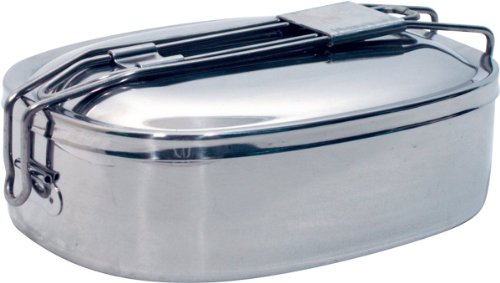
Match the fitting to your stove first: screw-thread for most modern burners, Campingaz cartridges for Campingaz stoves, pierceable or cassette cans for cheaper cookers. Then choose a butane/propane or isobutane mix so it works in the cold, buy a slightly larger canister than you think you need plus a spare, store it cool and upright, and never burn it indoors without a CO alarm. Browse the gas canisters we rate, pair them with a stove and a mess tin, and you've got reliable hot food and drink when the power's off or you're miles from a kitchen.