- 01 Why keep a hot water bottle in a UK winter kit?
- 02 What to look for when buying
- 03 The BS 1970 safety standard
- 04 Capacity: 1L, 1.5L or 2L
- 05 A cover is not optional
- 06 Rubber vs PVC vs newer materials
- 07 How to fill a hot water bottle safely
- 08 How long do they last — and when to replace one?
- 09 Microwave and gel alternatives
- 10 Fitting it into a winter warmth plan
- 11 Frequently asked questions
- 12 Can you use a hot water bottle in a power cut?
- 13 Should I use boiling water in a hot water bottle?
- 14 How often should you replace a hot water bottle?
- 15 Is a hot water bottle or hand warmers better?
- 16 Are hot water bottles safe for children and older people?
- 17 The short version
A hot water bottle is one of the cheapest and most effective ways to stay warm through a UK winter — and it comes into its own the moment the heating goes off. In a power cut it needs nothing but hot water you can boil on a camping stove or from a flask, so it keeps a bed, a chair or a pair of cold hands warm when the radiators are dead. It's also a kinder way to warm a room than turning the thermostat up: warm the person, not the whole house. This guide covers what to look for, how to fill one safely (the single biggest cause of hot water bottle injuries), how long they last, and where a microwave or gel warmer makes more sense — plus how a hot water bottle fits a proper warm-room or bedside power-cut plan.
Why keep a hot water bottle in a UK winter kit?
Central heating fails exactly when you need it — a storm brings the power down, or the boiler packs in on the coldest night of the year. A hot water bottle is the low-tech answer: fill it from a kettle, a pan on a stove or a vacuum flask of hot water, and it holds useful warmth for hours with no electricity. It's especially valuable for older relatives, for a baby's or child's room, and for anyone who feels the cold, because it lets you keep the person warm cheaply rather than heating an empty house. Unlike single-use hand warmers, it's reusable indefinitely, and unlike a plug-in electric blanket it works when the power is out.
What to look for when buying
The BS 1970 safety standard
The most important thing on the label is the British Standard: look for a bottle made to BS 1970. It's the UK safety standard for rubber and PVC hot water bottles, covering the material, the neck and the stopper — the parts that fail and cause scalds. A bottle that meets BS 1970 will also be date-stamped (see below). Cheap, unbranded bottles that don't state the standard are a false economy: the whole point of the thing is to hold near-boiling water safely against your skin.
Capacity: 1L, 1.5L or 2L
Most bottles are around 2 litres, which holds heat longest and is the usual choice for a bed or a chair. A 1-litre bottle is lighter, warms up and cools down faster, and is easier for children, smaller hands or holding against a specific ache. If you're buying for warmth through a long cold night, a 2-litre bottle is the sensible default; for targeted warmth or for a child, a 1-litre is easier to handle. Some people keep one of each.
A cover is not optional
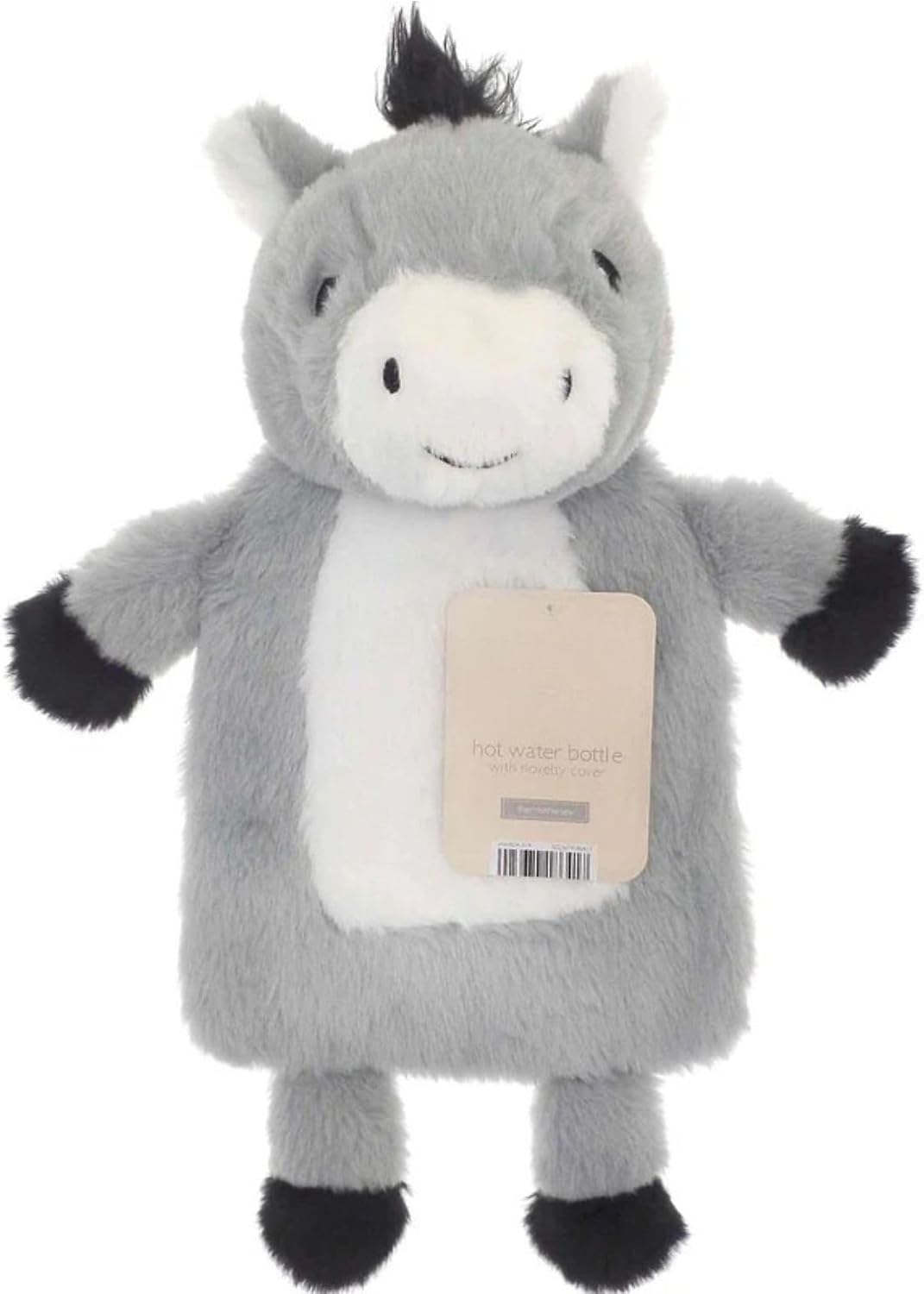
A fabric cover — fleece, knitted or faux-fur — is what stops a freshly filled bottle burning your skin, and it makes the warmth last a little longer too. Never use a bare bottle straight against the body. Many bottles come with a cover; if yours doesn't, buy one, or improvise with a towel or jumper until you do. The fleece-covered and knitted-cover bottles we list all come with their cover, which is the simplest way to be sure.
Rubber vs PVC vs newer materials
Traditional natural-rubber bottles are flexible, mould to the body and are widely trusted; some people find they have a faint rubber smell when new, which fades. PVC and thermoplastic bottles are odourless and often cheaper. Both are fine if they meet BS 1970. What matters more than the material is the condition: rubber perishes with age and heat, so an old bottle — whatever it's made of — is the one that splits.
How to fill a hot water bottle safely
Overfilling and using genuinely boiling water are the two things that cause bottles to split or scald, so this is worth getting right every time. Boil the kettle, then let it stop boiling before you pour — fill with hot, not violently boiling, water. Fill the bottle only about two-thirds full, hold it upright, and squeeze the air out until water reaches the neck before you screw the stopper in firmly. Don't overtighten, and don't top it right up: a full, air-filled bottle is under far more pressure. Always put the cover on before it touches skin, and never fill a bottle while it's resting against your body. When you're not using it, empty it, and store it hanging or lying flat with the stopper out so the sides don't stick together.
How long do they last — and when to replace one?
Rubber and PVC both degrade over time, and a perished bottle is a burst waiting to happen. As a rule of thumb, replace a hot water bottle every two to three years, sooner if you use it heavily. Check the daisy-wheel date stamp on the neck: the number in the centre is the year of manufacture, and the petals or segments mark the month, so you can see how old it is. Before each winter, inspect it — flex the rubber and look for cracks, cloudiness, a soft or bulging area, or any weeping around the neck and stopper. If in doubt, bin it and buy a new one; they cost a few pounds and a split bottle full of hot water is a serious burn.
Microwave and gel alternatives
If you're nervous about filling a bottle, or you specifically want warmth that survives a power cut without any hot water at all, a microwave or gel warmer is worth knowing about — with one big caveat. A microwaveable bottle (often a gel or wheat/grain pad in a plush cover) heats in the microwave in a couple of minutes and needs no boiling water, which some people find safer and less fiddly. The catch for prepping: a microwave needs mains power, so in an actual power cut you can't reheat it — a traditional bottle you can refill from a stove wins. Reusable hand warmers (the click-to-activate gel type, recharged by boiling) and single-use air-activated warmers are the pocket-sized cousins; we compare the two directly in hot water bottle vs hand warmers. The honest summary: for whole-body, long-lasting, power-cut-proof warmth, a classic rubber bottle you can refill is the most reliable; the microwave and gel types are a convenient extra, not a replacement.
Fitting it into a winter warmth plan
A hot water bottle is a building block, not a whole plan. The most effective approach in a cold snap or power cut is to warm one room and warm the people in it: close doors, layer up in thermal base layers, and use a hot water bottle plus a wool blanket or a sleeping bag rather than trying to heat the whole house. At night, a filled bottle in the bed twenty minutes before you get in makes a cold room bearable — the heart of a bedside power-cut kit. For getting out and about, pocket hand warmers are the portable version. Keep a couple of bottles and covers in the warmth part of your kit, check their dates each autumn, and you've a reliable source of warmth that costs pennies and never needs charging.
Frequently asked questions
Can you use a hot water bottle in a power cut?
Yes — that's one of its best uses. It needs only hot water, which you can boil on a camping stove or pour from a vacuum flask, so it keeps you warm when the heating and electric blankets are dead. That's exactly why it belongs in a winter power-cut kit. A microwaveable bottle, by contrast, can't be reheated without mains power, so a traditional refillable bottle is the more reliable choice for an outage.
Should I use boiling water in a hot water bottle?
No. Boil the kettle, then let it go off the boil before you fill — very hot, not violently boiling, water. Fill only about two-thirds full, squeeze the air out before sealing, and always use a cover. Boiling water and overfilling are the main reasons bottles split or cause scalds, so filling carefully every time is the single most important safety habit.
How often should you replace a hot water bottle?
Every two to three years, and sooner if it's used a lot or shows any sign of wear. Rubber and PVC perish with age and heat. Check the date stamp on the neck (the wheel shows the year in the centre and the month around it), and before each winter flex the bottle and look for cracks, cloudiness, soft spots or leaks around the stopper. A perished bottle can burst, so replace it at the first doubt — they only cost a few pounds.
Is a hot water bottle or hand warmers better?
They do different jobs. A hot water bottle gives long-lasting, whole-body warmth for a bed or a chair but stays in one place; hand warmers are pocket-sized and go with you out of the house. For staying warm indoors during a cold night or power cut, the bottle wins on warmth and duration; for keeping fingers working outdoors, hand warmers win on portability. We set them side by side in hot water bottle vs hand warmers. Many people keep both.
Are hot water bottles safe for children and older people?
Yes, with care. Always use a cover, fill with hot rather than boiling water, and don't overfill. For children, a 1-litre bottle is easier and safer to handle, and an adult should fill it. Older skin can be more prone to burns and slower to feel heat, so use a cover, warm the bed rather than resting the bottle directly against the skin for long periods, and check the bottle is in good condition. Used sensibly, it's one of the safest and cheapest ways to keep a vulnerable relative warm.
The short version
A hot water bottle is cheap, reusable, and — unlike an electric blanket — works in a power cut, which makes it a quiet hero of a UK winter kit. Buy one made to BS 1970 with a cover, choose 2 litres for the longest-lasting warmth (or 1 litre for children and easy handling), and fill it with hot-not-boiling water, two-thirds full, air squeezed out. Check the date stamp and replace it every two to three years or at the first sign of perishing. Keep a microwaveable or hand-warmer backup for convenience, but rely on the refillable bottle for real outages — and pair it with a wool blanket, thermal layers and a warm room for the cheapest reliable warmth there is.