Home / Comparison
Side-by-side comparison

Smoke Alarm vs Carbon Monoxide Alarm

Smoke Alarm vs Carbon Monoxide Alarm

A smoke alarm and a carbon monoxide alarm are both small, cheap devices that wake you up before a home emergency becomes fatal, but they detect completely different hazards. A smoke alarm responds to particles from a fire, giving early warning so you can get out before smoke overcomes you. In UK homes that usually means optical alarms in hallways, landings and living areas, with heat alarms sometimes used in kitchens to avoid nuisance triggers. A good sealed-battery smoke alarm commonly costs around £10 to £30.

A carbon monoxide alarm detects CO, an invisible, odourless gas produced when fuels such as gas, oil, coal, wood or petrol burn badly or vent poorly. It is the alarm you need near boilers, open fires, wood burners, gas cookers used heavily, and anywhere a portable combustion heater might be used. CO poisoning can look like tiredness, headache or nausea before it becomes life-threatening, so you cannot rely on noticing it. A certified domestic CO alarm typically costs around £15 to £35, which is little money for a risk you cannot see or smell.

Feature comparison

FeatureSmoke AlarmCarbon Monoxide Alarm
Hazard detectedSmoke from a fire, giving early warning before smoke inhalation blocks escape.Carbon monoxide gas from faulty or poorly ventilated fuel-burning appliances.
Where to fitOn ceilings in circulation spaces such as halls and landings, plus rooms where fires may start.In rooms with fuel-burning appliances, following the manufacturer's height and distance instructions.
Best seasonal relevanceWinter candles, heaters, overloaded sockets and cooking during power cuts all raise fire risk.Cold-weather heating, blocked flues and any indoor combustion make CO risk more serious in winter.
Nuisance triggersSteam, burnt toast or cooking smoke can trigger poorly placed alarms.Should not nuisance-trigger from normal steam or cooking smells; any alarm should be treated seriously.
Testing and replacementTest monthly and replace by the expiry date, commonly after 10 years.Test monthly and replace by the expiry date, often 5 to 10 years depending on sensor life.
Legal or rental relevanceExpected in every home and required in rented accommodation under UK rules.Required in many rented settings where fixed combustion appliances are present, and sensible in owner-occupied homes too.
Price bandRoughly £10 to £30 for a sealed-battery domestic smoke alarm.Roughly £15 to £35 for a certified domestic CO alarm.

When to choose Smoke Alarm

Prioritise smoke alarms first if a home does not already have working alarms on each level. Fire moves quickly, smoke incapacitates people long before flames reach them, and night-time warning is the whole point of the device. Fit alarms where you will hear them from bedrooms, test them regularly and avoid placing ordinary smoke alarms directly in kitchens or bathrooms where nuisance alarms lead people to disable them. A working smoke alarm is one of the highest-value safety items in any emergency kit.

When to choose Carbon Monoxide Alarm

Prioritise a carbon monoxide alarm anywhere fuel is burned, especially in autumn and winter when heating runs for longer and windows stay closed. That includes gas boilers, open fires, wood burners, oil heating, gas cookers, camping stoves used incorrectly, and attached garages where engines may run briefly. If the alarm sounds, do not investigate heroically: move into fresh air, turn appliances off if safe, call the emergency number for the fuel involved, and seek medical advice if anyone feels unwell.

Our verdict

These alarms are partners, not substitutes. A smoke alarm cannot detect carbon monoxide, and a CO alarm cannot warn you about a spreading fire. Every UK home should have working smoke alarms, and any home with fuel-burning appliances should also have properly placed CO alarms. For the cost of a takeaway, the pair covers two of the most serious winter household risks: fire you may not wake up to, and gas you cannot smell.

Top picks · Trusted suppliers

Recommended products

Aico Ei146RC Mains-Powered Smoke Alarm (2-Pack)

Aico Ei146RC Mains-Powered Smoke Alarm (2-Pack)

Mains-powered optical smoke alarms with a rechargeable back-up cell, from Aico — the brand fitted as standard in a large share of UK homes and social housing. Unlike battery-only units these wire into the ring and can be interlinked, so one triggered alarm sounds them all. This is the fit-and-forget option for anyone wanting proper hard-wired cover rather than relying on a single stand-alone detector.

  • Mains-powered with a rechargeable back-up so it works in a power cut
  • Can be interlinked so every alarm sounds together
  • Optical sensor suited to slow, smouldering household fires
Check price on Amazon →
CPVAN Wireless Interlinked Smoke, Heat & Carbon Monoxide Alarm Bundle

CPVAN Wireless Interlinked Smoke, Heat & Carbon Monoxide Alarm Bundle

A set of wirelessly interlinked alarms covering smoke, heat and carbon monoxide, so when one is triggered they all sound. That whole-home warning matters most in a house with bedrooms upstairs and a kitchen below, where a single beeping unit is easy to sleep through. They link over radio, so there is no mains rewiring to fit them.

  • Interlinked, so one trigger sounds every alarm in the home
  • Covers smoke, heat for the kitchen, and carbon monoxide
  • Wireless linking means no mains rewiring
Check price on Amazon →
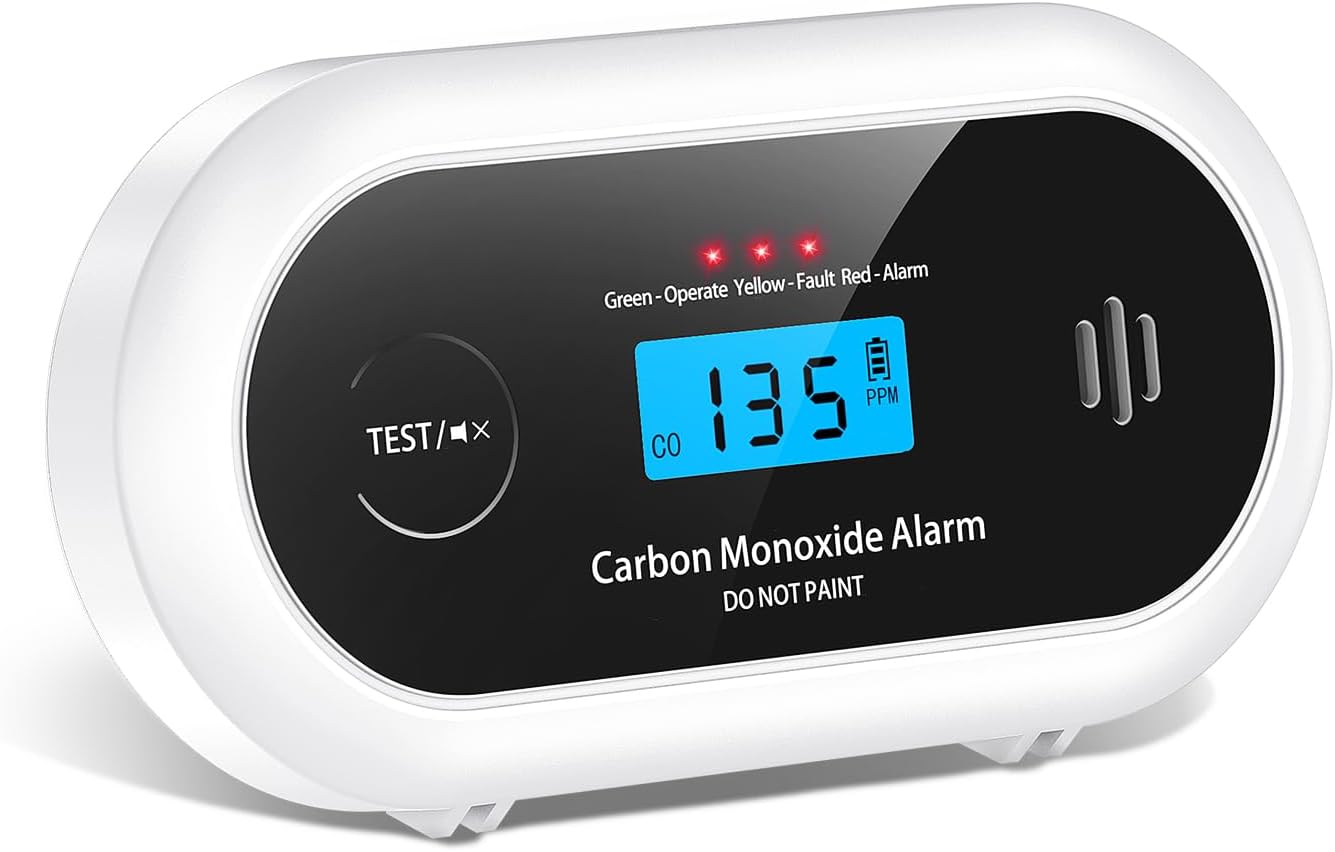
Alertlink 10-Year Carbon Monoxide Alarm with LCD Display

Alertlink 10-Year Carbon Monoxide Alarm with LCD Display

A battery carbon monoxide alarm with a sealed 10-year cell, so there is nothing to replace for the life of the unit. The LCD shows the current CO reading and there is no wiring to do, which makes it easy to add near a boiler, wood burner or portable stove. A basic safety item worth having anywhere fuel is burned indoors.

  • Sealed 10-year battery, no cell changes for the unit's life
  • LCD shows live CO readings, not just an alarm state
  • Battery-only fitting means no wiring or electrician
Check price on Amazon →