Home / Comparison
Side-by-side comparison

Paracord vs Bungee Cords

<p>Paracord is a thin braided nylon cord, originally developed for parachute suspension lines, that has become a staple of UK preparedness kits thanks to its strength, low weight and sheer versatility. A typical 550 paracord is rated for roughly 250kg of static load when new and in good condition, though real-world working loads should always be treated far more conservatively. Beyond its core use as a static line, many users strip the inner strands out for fine repairs, fishing line or emergency stitching, and the outer sheath alone still ties useful knots. It is cut once, tied, and effectively becomes a permanent fixture until deliberately removed.</p>

<p>Bungee cords, sometimes called shock cords, are elasticated straps built around a rubber or latex core wrapped in a woven sheath, usually finished with metal or plastic hooks at each end. Where paracord holds a fixed shape once tied, a bungee stretches to apply constant tension and then springs back, which makes it excellent for quick tie-downs but poor for anything needing a rigid, load-bearing line. The two are genuinely complementary rather than direct rivals, and a well-stocked bag or vehicle kit in the UK typically carries both. Expect to pay roughly £8 to £20 for a decent length of paracord and £5 to £15 for a set of bungee cords with hooks.</p>

Feature comparison

FeatureParacordBungee Cords
Strength/load rating550 paracord is typically rated around 250kg static breaking strength when new, though working loads should be far lower.Load capacity varies by thickness and is generally much lower than paracord; not intended for load-bearing or safety-critical use.
Stretch vs staticEssentially non-stretch, so knots hold their shape and length precisely once tied.Elasticated core stretches significantly, giving constant tension but an unpredictable, shifting hold.
Best useShelter ridgelines, lashing gear, knots, first-aid slings, fishing line and general cordage tasks.Quick tie-downs, securing loose loads to a roof rack or rucksack, and tensioning tarp edges.
Reusability once cut/tiedOnce cut to length it stays that length; knots can be untied and retied repeatedly with no loss of function.Hooked ends reuse indefinitely without cutting, but the elastic core degrades and weakens with age and UV exposure.
Pack size/weightVery light and compact; a full hank coils down to fit easily in a jacket pocket or bag side pouch.Slightly bulkier per metre due to the hooks and thicker elastic core, though still easy to carry.
VersatilityExtremely versatile; ties knots, lashes structures, and the inner strands can be stripped for finer repair tasks.Narrower use case focused on tensioned tie-downs; hooks make quick attachment easy but limit knot-tying flexibility.
Price bandRoughly 8 to 20 pounds for a useful length, depending on diameter and strand count.Roughly 5 to 15 pounds for a set, depending on length, thickness and hook quality.

When to choose Paracord

<p>Choose paracord when you need a genuinely static, load-bearing line that holds its shape once tied. For shelter building, a taut ridgeline strung between two trees needs cord that will not stretch and sag overnight, and paracord's knot-friendly construction makes it ideal for guy lines, tarp corners and bushcraft lashings. It is also the better choice for improvised repairs, from replacing a snapped bootlace to fixing a broken rucksack strap, and for first-aid improvisation such as a sling or a splint tie. If your task involves tying a specific knot that must hold under load, paracord is the more trustworthy material.</p>

When to choose Bungee Cords

<p>Choose bungee cords when you need to secure something quickly without tying knots, and where a bit of give is actually useful. Strapping a loose load to a roof rack, lashing kit to the outside of a rucksack, or tensioning a tarp so it stays taut as the fabric expands and contracts in changing weather are all jobs bungees do faster and more forgivingly than static cord. Their hooks make attachment and removal near-instant, which matters when you are loading a car boot in the rain or packing down camp in a hurry. They are not for anything safety-critical or load-bearing.</p>

Our verdict

<p>Paracord and bungee cords solve different problems and neither replaces the other. Paracord is your static, knot-tying line for shelter, repairs and anything that must hold a fixed shape under load, while bungees are your fast, elasticated tie-down for securing loose loads and tensioning fabric. A well-prepared UK kit benefits from carrying both, since the low cost and small pack size of each make it easy to include a hank of paracord and a set of bungees side by side. If forced to pick one, paracord's far greater versatility and reliability under real load make it the safer default choice.</p>

Top picks · Trusted suppliers

Recommended products

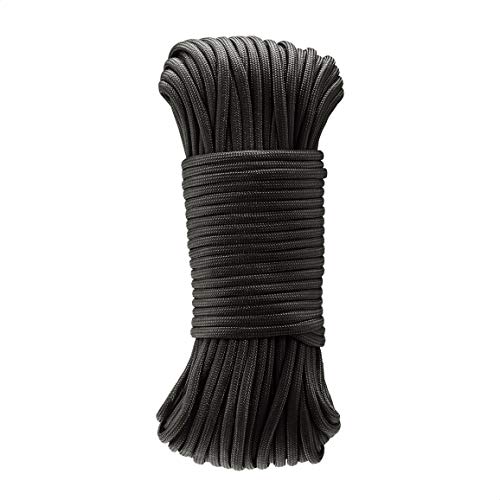
Amazon Basics 550 Paracord (30m)

Amazon Basics 550 Paracord (30m)

A 30-metre length of 7-strand 550 paracord for shelter building, gear repairs and countless improvised jobs. One of the highest-utility items you can pack for its weight.

  • Strong 7-strand core for demanding tasks
  • Inner strands can be separated for fine cordage
  • Endless uses from shelters to repairs
Check price on Amazon
Bungee Cords with Carabiner Clips (6 Pack)

Bungee Cords with Carabiner Clips (6 Pack)

Assorted-length elasticated bungee cords with strong carabiner hooks for securing loads, rigging shelters and strapping down gear quickly and reusably.

  • Assorted lengths for any job
  • Strong carabiner-style hooks
  • Reusable, quick to apply and release
Check price on Amazon