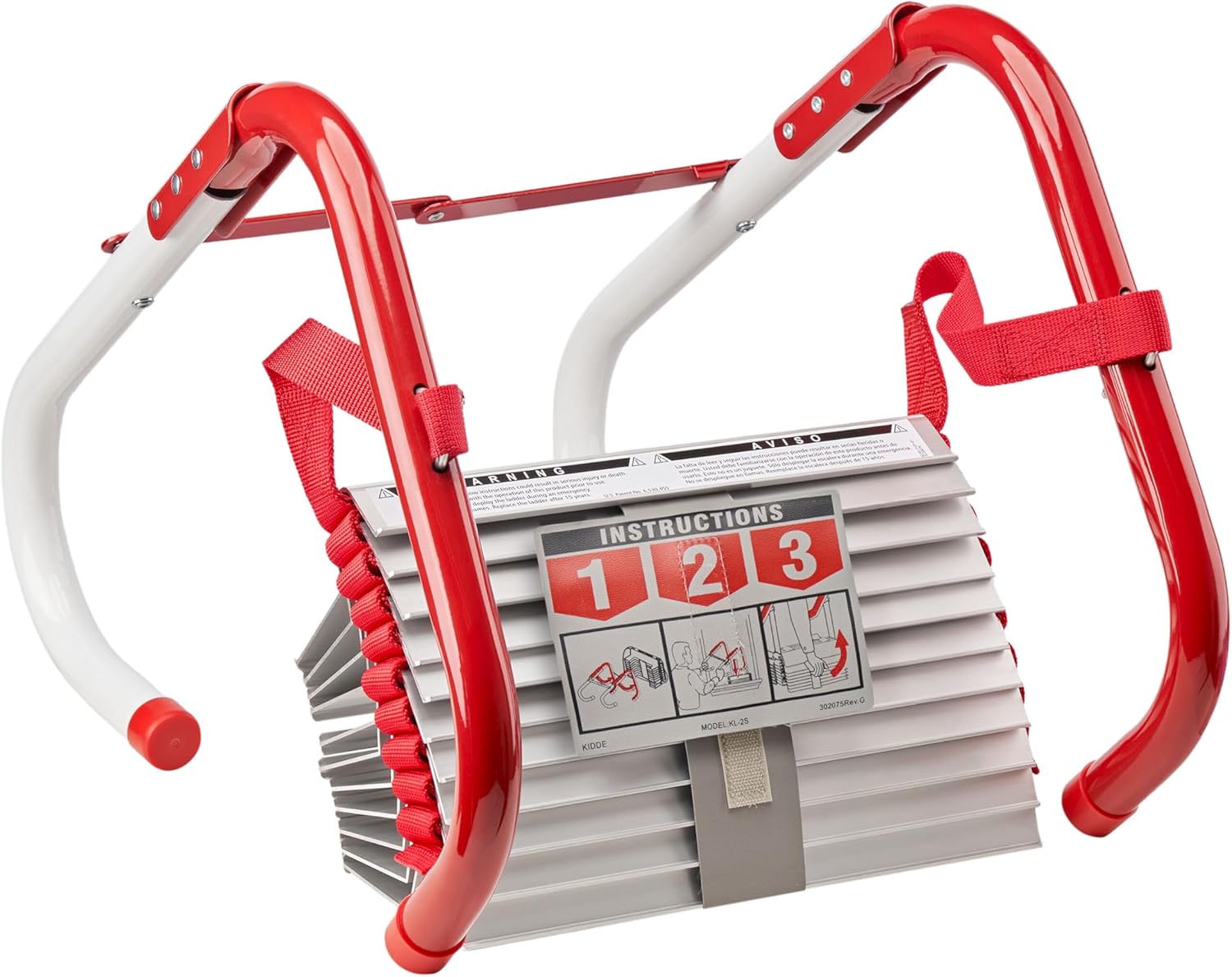
| Primary job | Provides an emergency exit from an upper-floor window if the usual route is blocked. | Detects smoke and warns people early enough to escape. |
| Best UK use case | Bedrooms above ground level where stairs could be cut off and the window is suitable for a ladder. | Every home, every floor, especially hallways, landings and near sleeping areas. |
| Priority | Useful for specific layouts, but secondary to prevention, detection and normal exit routes. | Essential first layer of home fire safety. |
| Ease in a real emergency | Requires a suitable window, clear access, physical ability and some familiarity before it is needed. | Works automatically when fitted, powered and maintained. |
| Maintenance | Check fixing method, window fit, weight rating and storage location; practise safely without taking risks. | Test regularly, keep batteries or sealed units in date, and replace expired alarms. |
| Limitations | May be unusable for children, older people, disabled occupants, unsuitable windows or thick smoke outside. | Warns you but does not create a physical exit or suppress the fire. |
| Winter relevance | Most relevant where closed internal doors, overnight fires or blocked stairs are part of the risk plan. | Vital when people are asleep and winter routines add cooking, candles or heating risks. |