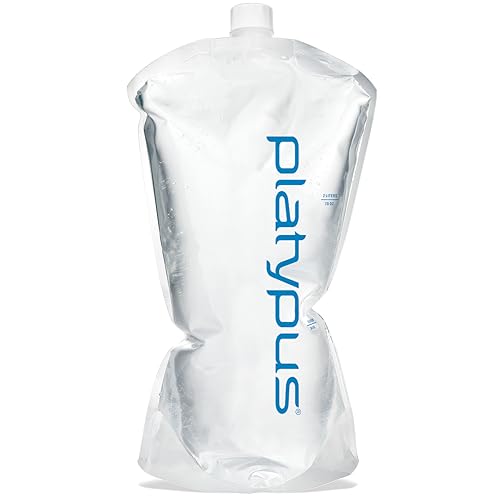
| Primary job | Stores or transports several litres of household water for drinking, cooking and basic hygiene. | Carries personal drinking water while packing down small when empty. |
| Best UK use case | Burst mains, frozen pipes, boil-water notices, campsite taps and collecting water from a bowser. | Grab bags, commuting, hiking, car kits, day bags and topping up at safe taps during travel disruption. |
| Capacity | Often 5 to 20 litres, enough to make a meaningful household buffer. | Usually 0.5 to 2 litres, enough for one person for a short outing or as a refillable spare. |
| Ease of use at home | A rigid or semi-rigid carrier with a tap is easier for kitchens and rationing water cleanly. | Less convenient for pouring into pans or sharing between several people. |
| Portability | Heavy when full and awkward over distance, though useful in a car or for short carries. | Light and packable, with little penalty when empty. |
| Hygiene | Wide caps and taps make cleaning easier, but large carriers still need drying before storage. | Flexible corners can be harder to dry fully, so regular cleaning matters. |
| Typical price band | Roughly 8 to 40 pounds depending on capacity, tap quality and material. | Roughly 8 to 25 pounds for most useful collapsible bottles or soft flasks. |