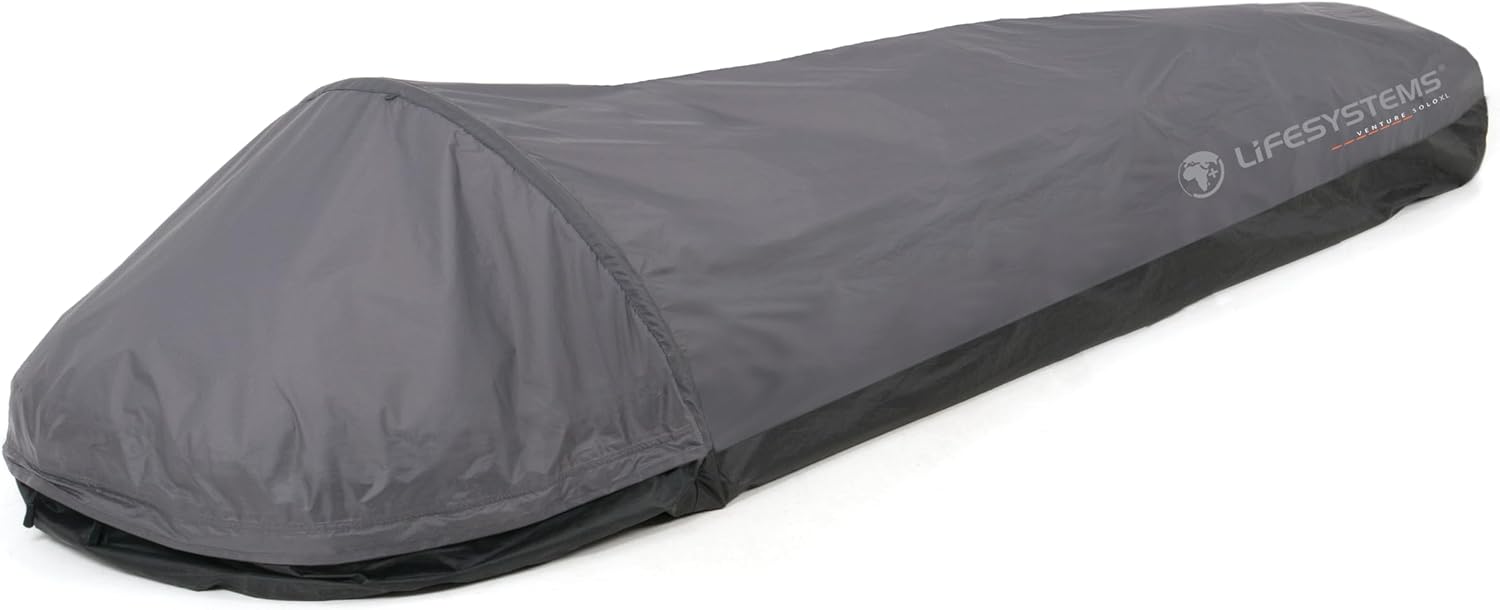
| Weather protection | Excellent overhead cover from rain and sun, but open sides let wind and driven rain reach you unless pitched low and carefully. | Fully enclosed waterproof shell that seals you in against rain, wind and ground damp, though a soaked outer can chill an unlined sleeping bag. |
| Pack size and weight | Light and packable, typically 300 to 800 grams, though cordage and pegs add a little bulk to the load. | Very compact and often lighter, from around 200 grams for a basic shell up to 700 grams for a breathable model. |
| Setup speed | Slower and skill-dependent; you need trees, poles or walking poles plus practice to pitch it well in wind. | Almost instant; unroll it, slide your sleeping bag inside and you are ready, ideal for a late or exhausted arrival. |
| Space and comfort | Generous covered space to sit up, cook, sort kit and shelter a companion or two under one pitch. | Snug and personal with room for one; comfortable to sleep in but cramped for anything beyond lying down. |
| Ventilation and condensation | Excellent airflow thanks to open sides, so condensation is rarely a problem beneath a tarp. | Prone to internal condensation, especially with cheaper non-breathable fabrics, which can leave your bag damp by morning. |
| Versatility and best use case | Highly versatile; works as a shelter, groundsheet, windbreak or gear cover, and suits group or basecamp wild camping. | Focused single purpose; best for fast, light solo trips, bothy backup and emergency use where speed and low weight matter most. |
| Price band | Roughly fifteen to thirty pounds for basic sheets, fifty pounds and up for quality camping tarps with tie-outs. | Around twenty pounds for simple emergency shells, rising past one hundred pounds for breathable waterproof models. |