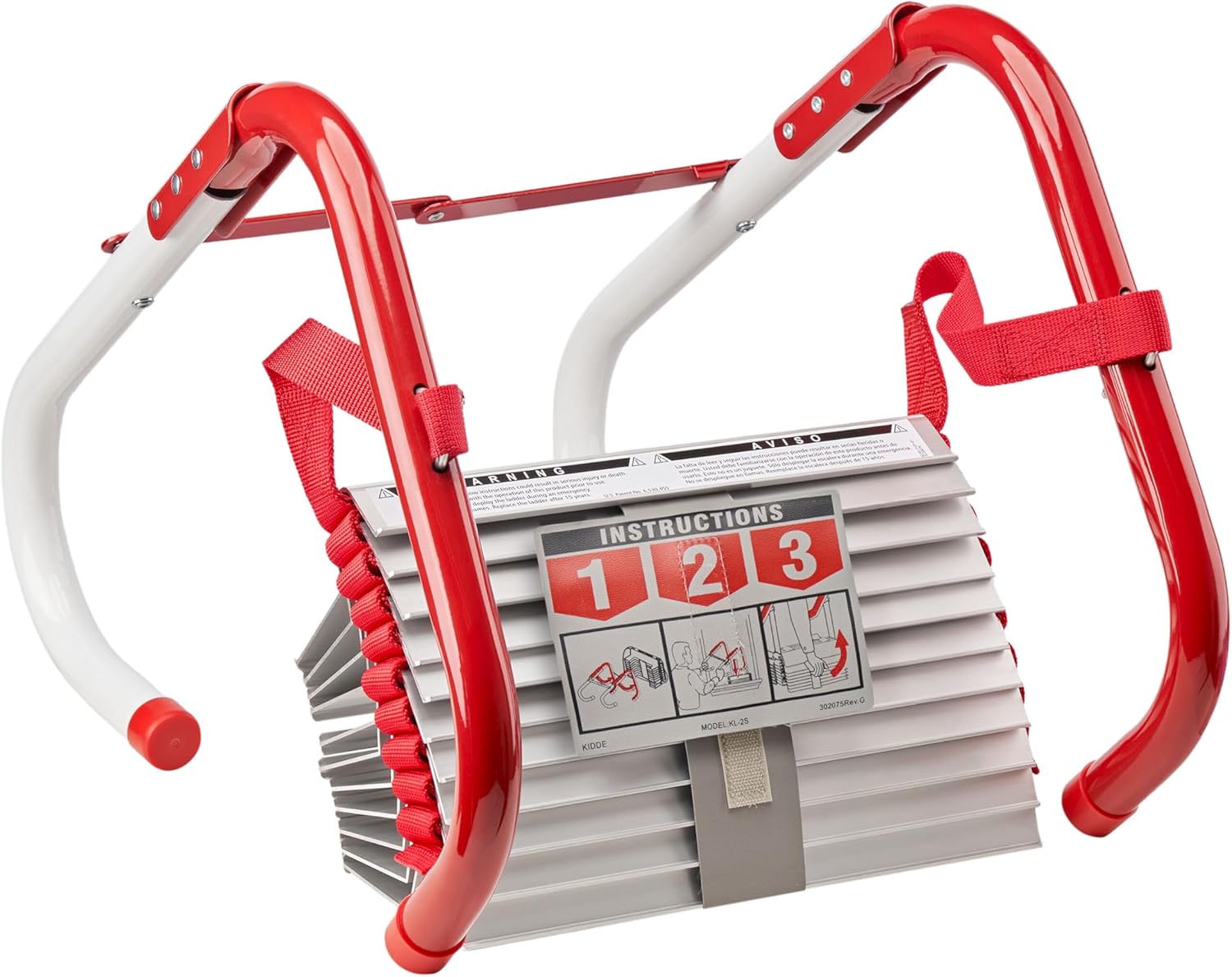
| Main job | Escape — get people safely down from an upstairs window when the stairs are impassable. | Suppression — smother a small fire (usually a hob pan fire) in its first seconds. |
| When you'd use it | During an escape, once a fire is already established and the normal exit is cut off. | At the very start, on a small contained fire — or to wrap someone whose clothes catch alight. |
| Where it lives | Stored near an upstairs window or bedroom that has no other escape route below. | Mounted in the kitchen within arm's reach of the hob, but not directly above it. |
| Skill to use | Needs to be practised — hooking it on and climbing down under stress is not intuitive. | Simple to deploy, but you must turn off the heat, cover fully and never lift it too soon. |
| Limitations | Only helps at the escape stage; no use against the fire itself, and hard for the very young, frail or injured. | Only for small fires; useless once a fire has spread, and never for chip-pan fires you cannot fully cover. |
| Standards to look for | Anti-slip rungs, stabilisers to hold it off the wall, and a length that matches your floor height. | BS EN 1869:2019 kitemarked, at least 1m x 1m for home kitchen use. |
| Price band | Roughly 25 to 60 pounds depending on length and build quality. | Roughly 8 to 20 pounds for a kitemarked home blanket. |