Home / Comparison
Side-by-side comparison

Carbon Monoxide Alarm vs Portable Stove

Carbon Monoxide Alarm vs Portable Stove

This is not really a choice between two competing products — it is a warning about how they belong together. A portable stove is one of the most useful things to own when a power cut leaves you without a hob: a gas, spirit or solid-fuel burner lets you boil water for a flask, warm a tin of food and make a hot drink when the electric cooker is dead. But every fuel-burning stove produces carbon monoxide, an odourless, colourless gas that kills silently, and the temptation on a cold winter evening is to bring the stove indoors and cook with the doors and windows shut.

A carbon monoxide alarm is the cheap, battery-powered device that stands between that mistake and a tragedy. It costs around fifteen to twenty-five pounds, sits on a shelf or wall, and sounds when CO builds to a dangerous level — giving you the warning your senses cannot. The honest answer to "stove or CO alarm?" is that if you own any fuel-burning stove, heater or lantern, you must own a working CO alarm too. Buy the stove for the cooking; buy the alarm because the stove can harm you.

Feature comparison

FeatureCarbon Monoxide AlarmPortable Stove
What it doesDetects dangerous carbon monoxide and sounds a loud alarm before levels become harmful.Burns gas, spirit or solid fuel to boil water and heat food when mains cooking is down.
Role in a power cutThe safety backstop — warns you if any burning appliance is releasing CO indoors.The practical workhorse — a hot drink and warm meal when the hob won't switch on.
Produces CO?No; it only measures it. It has no moving parts and burns nothing.Yes; every fuel-burning stove gives off carbon monoxide, more so with poor ventilation.
Where you use itMounted or placed in any room where fuel is burned, ideally at breathing height.Best used outdoors or in a very well-ventilated space — never in a sealed room or tent.
Running costA set of batteries over a sealed 7–10 year sensor life; effectively pennies a year.The price of gas canisters, meths or fuel tablets each time you cook.
Price bandRoughly 15 to 25 pounds for a certified alarm meeting BS EN 50291.Roughly 15 to 60 pounds depending on stove type, plus ongoing fuel.
Skip it and you riskNo early warning — CO poisoning while you sleep, with headaches, drowsiness or worse.No way to cook or boil water safely during an extended outage.

When to choose Carbon Monoxide Alarm

You do not choose a carbon monoxide alarm instead of a stove — you choose it because you have one. If your emergency kit contains any gas stove, camping burner, paraffin heater, disposable barbecue or fuel-burning lantern, a certified CO alarm is non-negotiable. Buy one that meets the BS EN 50291 standard, check the sensor's end-of-life date, and place it in whatever room you would realistically use the stove or a heater. It is one of the highest-value pounds in any preparedness kit: a small, silent guardian that only speaks up when your life depends on it. Test it when the clocks change, and treat a sounding alarm as a reason to get everyone into fresh air immediately.

When to choose Portable Stove

Choose a portable stove when you want the genuine comfort and morale a hot meal brings during an outage — but choose to use it correctly. Cook outdoors, on a doorstep, in an open porch or under a well-ventilated shelter, never in a closed kitchen, bedroom or tent. Match the stove to your needs: a screw-on gas canister stove is fast and controllable, solid-fuel tablets are compact and shelf-stable, and a meths burner is quiet and reliable in the cold. Keep a window cracked even in a garage or shed, keep the stove clear of anything flammable, and pair it with a CO alarm indoors so that if fumes ever drift back inside, you are warned. Used with ventilation and a CO alarm nearby, a portable stove is one of the most reassuring things in a winter kit.

Our verdict

These two are not rivals — they are a pair. The portable stove gives you hot food and clean boiled water when the power is out; the carbon monoxide alarm makes sure the stove, or any other burning appliance, never harms you while it does. If you already own or plan to buy a stove, heater or fuel lantern, put a certified CO alarm in the same kit and treat it as part of the stove's cost, not an optional extra. Buy the stove for the cooking, buy the alarm for the safety, ventilate whenever you burn fuel, and you have the practical and the protective halves of a sensible winter setup working together.

Top picks · Trusted suppliers

Recommended products

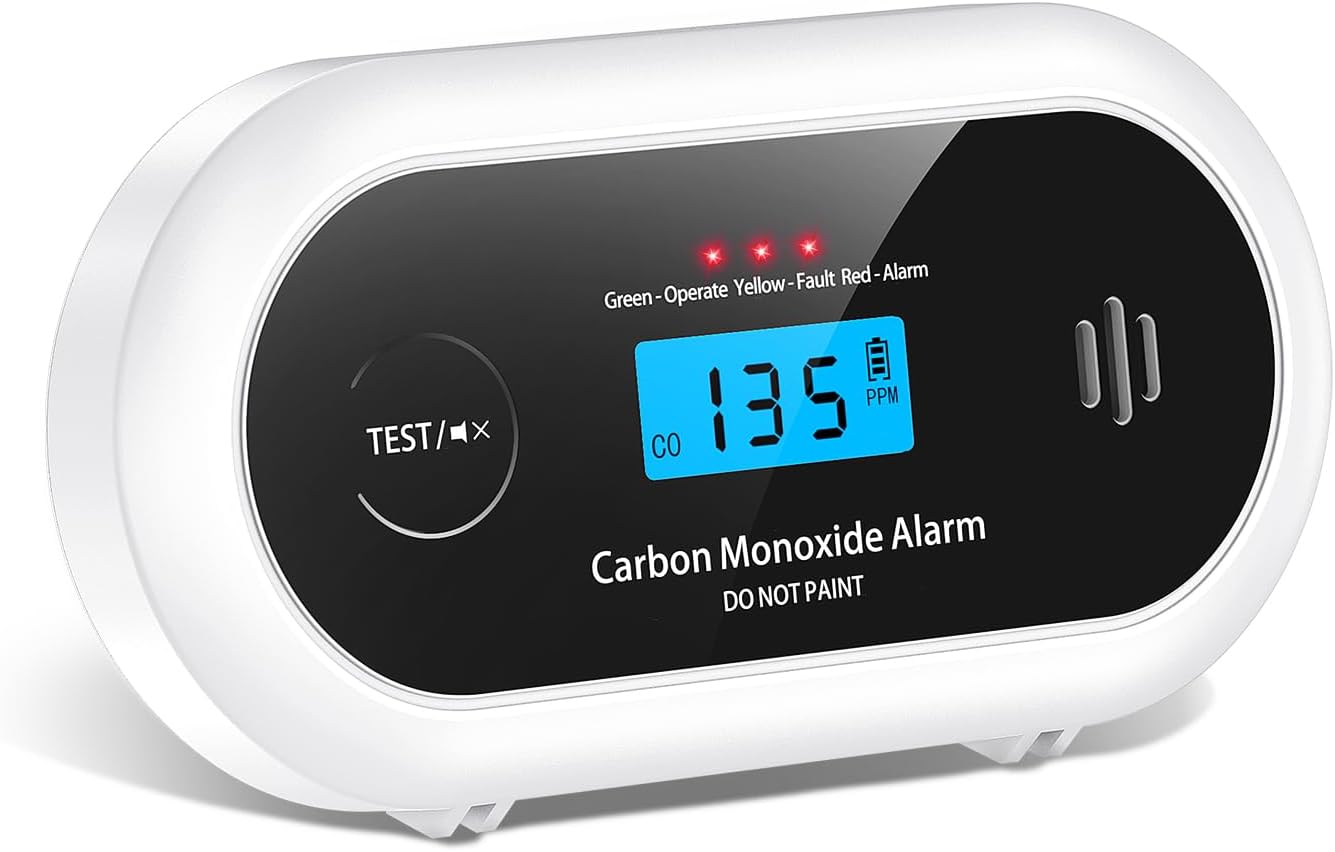
Alertlink 10-Year Carbon Monoxide Alarm with LCD Display

Alertlink 10-Year Carbon Monoxide Alarm with LCD Display

A battery carbon monoxide alarm with a sealed 10-year cell, so there is nothing to replace for the life of the unit. The LCD shows the current CO reading and there is no wiring to do, which makes it easy to add near a boiler, wood burner or portable stove. A basic safety item worth having anywhere fuel is burned indoors.

  • Sealed 10-year battery, no cell changes for the unit's life
  • LCD shows live CO readings, not just an alarm state
  • Battery-only fitting means no wiring or electrician
Check price on Amazon →
CPVAN Wireless Interlinked Smoke, Heat & Carbon Monoxide Alarm Bundle

CPVAN Wireless Interlinked Smoke, Heat & Carbon Monoxide Alarm Bundle

A set of wirelessly interlinked alarms covering smoke, heat and carbon monoxide, so when one is triggered they all sound. That whole-home warning matters most in a house with bedrooms upstairs and a kitchen below, where a single beeping unit is easy to sleep through. They link over radio, so there is no mains rewiring to fit them.

  • Interlinked, so one trigger sounds every alarm in the home
  • Covers smoke, heat for the kitchen, and carbon monoxide
  • Wireless linking means no mains rewiring
Check price on Amazon →
Portable Butane Camping Stove (with Case)

Portable Butane Camping Stove (with Case)

A low-cost tabletop butane stove with automatic ignition and a carry case. A practical outdoor backup hob for camping or a power outage when you have a safe, ventilated place to cook away from the home.

  • Inexpensive backup cooking for outdoor use
  • Automatic push-button ignition
  • Uses widely available butane cans
Check price on Amazon →
Campingaz Camp Bistro 3 Stove

Campingaz Camp Bistro 3 Stove

A single-burner butane stove that runs on Campingaz CP250 cartridges, giving you a stable 2,200W ring for boiling water or cooking a hot meal when the power is off. It sits flat on a sturdy outdoor surface and packs into its own carry case, which makes it a practical backup for camping and longer winter outages.

  • 2,200W burner boils water quickly for meals or hot drinks
  • Wide, stable base suits a firm outdoor cooking surface
  • Piezo ignition means no matches or lighter needed to start
Check price on Amazon →