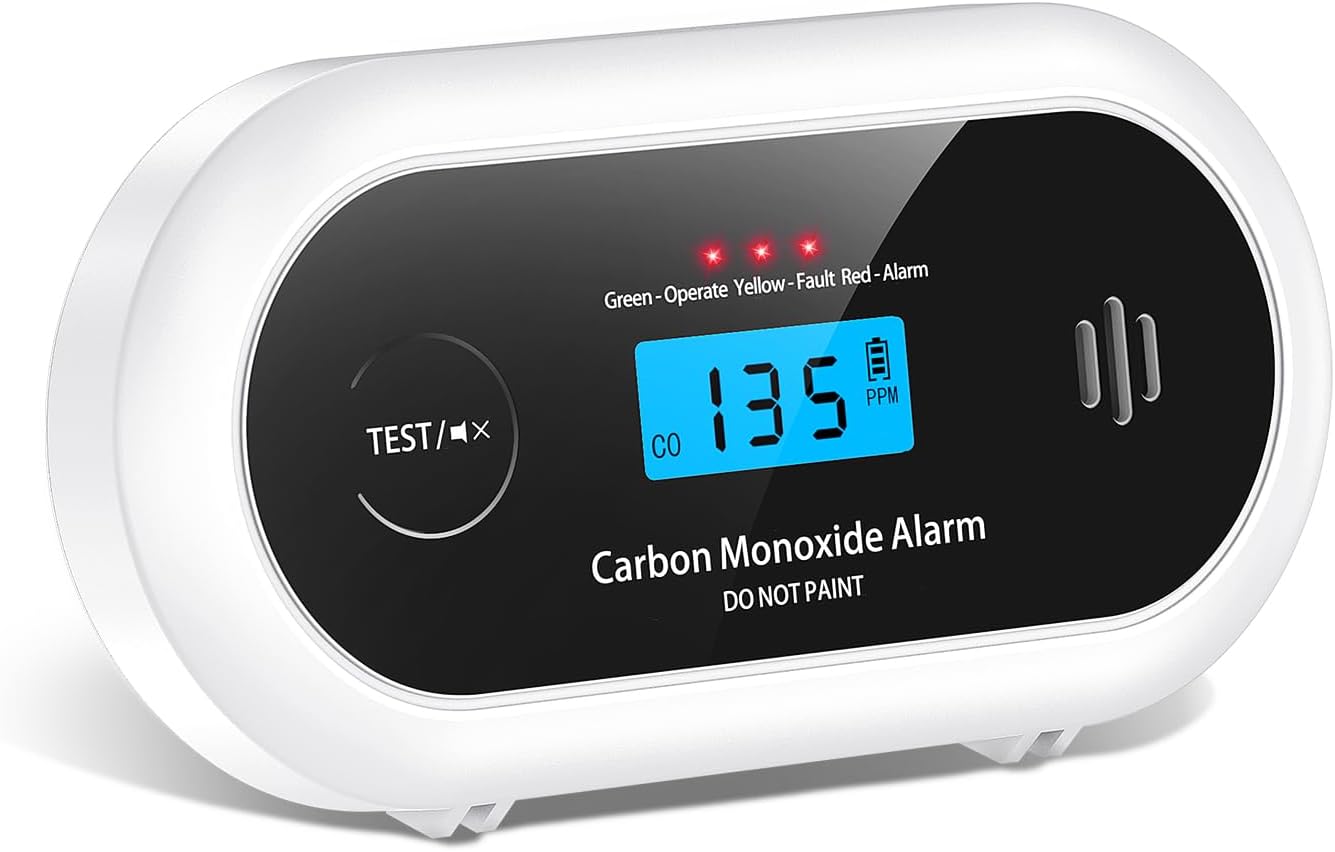
| Primary job | Continuously detects a dangerous, invisible gas and gives early warning before symptoms set in. | Actively smothers a small fire or wraps around burning clothing to stop it spreading. |
| How it's used | Passive — mounted on a wall or ceiling and left running, requires no action to work. | Active — must be physically pulled from its pouch and applied correctly in the moment. |
| Type of hazard covered | Carbon monoxide poisoning from boilers, wood burners, gas appliances or blocked flues. | Small kitchen fires, chip-pan fires or clothing fires. |
| Maintenance | Needs a battery check periodically (or is sealed with a long-life battery on some models) and replacement every 5-7 years. | No maintenance once mounted, though the pouch and fabric should be checked periodically for damage. |
| Where it belongs | Any room with a boiler, gas fire, wood burner or attached garage — a legal requirement in rented UK properties with fuel-burning appliances. | The kitchen, ideally mounted near but not directly beside the cooker for quick access without reaching over flames. |
| Failure consequence if missing | CO poisoning can be fatal and gives no warning smell or visible sign, making the alarm the only realistic early warning. | A small pan fire without a blanket nearby is more likely to be fought with water (dangerous with oil fires) or left to spread. |
| Price band | Roughly £10 to £25 per alarm. | Roughly £8 to £20 per blanket. |